

Content Marketing for Law Firms That Ranks and Signs Cases
Google holds legal content to its strictest standard, and generic agency blogs never rank under it. Our legal writers produce attorney-reviewed content mapped to the searches your clients actually make, and every piece is built to turn readers into consultations.


Legal content is held to a higher standard. Generic blogs fail it
Google classifies legal content as YMYL, 'Your Money or Your Life', its strictest category. Blog posts written by generalist freelancers, lightly researched and never reviewed by an attorney, do not rank under that standard. Worse, they erode the trust your entire site depends on.
We write content that meets the bar: legal specialists, attorney review, and every piece mapped to a keyword your clients search and a page that converts them. Do not take our word for it. Our own blog ranks on page one for the topics we write about.
What Your Firm Gets
Every piece we write is built for one outcome: content that ranks, earns trust, and sends you cases.

Legal Writers, Not Generalists
Our writers work only on law firm content, and every piece passes attorney review before it goes live. Your content is accurate on the law, compliant with bar rules, and safe under Google's strictest quality standard.

Every Post Mapped to a Keyword and a Money Page
No orphan blog posts. Every piece targets a real search your clients make and links to the service page it supports, so rankings turn into consultations instead of empty traffic.

Built for Google's Legal Standard
Experience, expertise, authority, and trust are baked into every piece: real answers, named sources, proper attribution. And we are honest about AI: it assists research, but humans and attorneys sign off every word.

Proof on Our Own Blog
We use the exact system we sell. Our own posts rank #10 for 'best redaction software for law firms' and #11 for 'personal injury keywords'. You can check before you call.
Content for Your Practice Area
Every practice area has its own questions, urgency, and reader. We write for the way your clients search.

Family Law Content
Divorce and custody readers are making emotional decisions. Clear, compassionate guides to timelines, costs, and custody questions earn their trust early.

Criminal Defense Content
Clients search urgent questions at all hours: what happens after an arrest, what to do next. Fast, direct answers put your firm in front of them first.

Personal Injury Content
Injury clients research case values, timelines, and fault rules. Detailed, honest answers to high-value questions bring high-value cases.

Bankruptcy Content
Bankruptcy readers are anxious and often embarrassed. Judgment-free explainers about chapters, exemptions, and processes turn quiet searches into calls.

Immigration Law Content
Immigration clients research complex processes in multiple languages. Step-by-step guides and checklists build trust across borders and time zones.

Estate Planning Content
Clients research wills, trusts, and probate for months. Patient, plain-language guides keep your firm with them until they are ready.

Meridian Legal Advisors: A Complete Website Redesign With Intake Built In


They took the time to understand our goals, listened to feedback, and made thoughtful recommendations that have significantly improved the overall design and user experience.
”How We Build Your Content Engine
A proven approach that delivers results
Content Audit and Keyword Map
We review what you have, what ranks, and what is missing, then map every valuable search in your practice areas to a piece of content. No two pieces ever compete.
Topic Plan Per Practice Area
You get a monthly plan: which topics, which keywords, which money page each piece supports, and why. You approve before we write.
Legal Writing With Attorney Review
Our legal writers draft, your attorneys review for accuracy and bar compliance, and we revise until you sign off.
Publish and Internally Link
Every piece goes live optimized: titles, structure, and links to the pages it supports, so authority flows where it converts.
Measure Rankings, Traffic, and Cases
Monthly reporting shows which pieces rank, which bring traffic, and which produce consultations. Next month's plan follows the data.

Find Out Why Your Content Is Not Ranking
Send us your website or blog. We will audit your content for free: what ranks, what is thin, what is missing, and what your competitors publish that you do not. You keep the audit either way, with no obligation.

The Law Firm Content Guide: Beyond the Basics
Legal content is the hardest content to rank, because Google holds it to its highest standard. This guide explains what that standard actually is, and how content turns into signed cases. Open the topics you want to go deeper on.
What does YMYL mean for your law firm's content?
Google classifies content that can affect someone's health, finances, safety, or freedom as YMYL, 'Your Money or Your Life', and legal advice sits squarely in it. Quality raters apply Google's highest standard to these pages: content must be accurate, trustworthy, and clearly written by people who know the subject. Thin, generic, or unattributed legal content does not just rank poorly; it drags down trust in your whole site. You can read Google's own helpful content guidance for the full standard.
E-E-A-T: what does Google look for on legal pages?
Experience, expertise, authoritativeness, and trust, with trust first. In practice, that means content written or reviewed by people with real legal credentials, named authors instead of anonymous posts, accurate citations of statutes and procedures, and a website that shows who is behind it. This is why every piece we write passes attorney review, and why we push clients to show their team and their results on their site.
Blog posts vs practice-area pages: what is the difference?
They do different jobs. Practice-area pages convert: they target hiring searches and turn visitors into calls. Blog posts attract: they answer the questions clients ask before they are ready to hire, build authority, and pass that authority to your money pages through internal links. A post like our best redaction software comparison ranks on page one and funnels readers toward the services it relates to. Neither works as well without the other.
Keyword mapping: why must your pages never compete?
When two pages on your site target the same search, they split the votes and both rank worse. It is the most common self-inflicted wound we find in content audits: five blog posts about the same topic, none of them ranking. Every keyword gets exactly one page, decided before anything is written. Your keyword map assigns each search to its page: service searches to service pages, questions to blog posts, city searches to location pages.
Does AI-generated content work for law firms?
Google does not ban AI content; it penalizes unhelpful content, however it is made. Mass-produced, unreviewed AI articles fail the YMYL standard and violate spam policies when published at scale. Our policy is simple: AI assists research and outlines, human legal writers write, and attorneys review every word before publication. We studied what AI-driven search actually does to law firm traffic in our analysis of 50 Florida law firm websites, and the winners are exactly the sites with genuinely helpful content.
How does content turn into signed cases?
A blog post rarely signs a client directly. It earns trust, then hands the reader to a page that converts. Every piece we publish links to the service page it supports, so the reader who found an answer at 11 pm finds your intake form one click later. And when they reach out after hours, AI chatbots built for law firms make sure the lead is captured instead of lost.
Featured case studies
Real firms, real numbers. See what the right content and systems delivered.

A Case Study For Bick Law LLP
We built a high speed law firm website demo with built-in lead qualification and Clio-integrated client portal, improving efficiency and reducing paralegal costs.

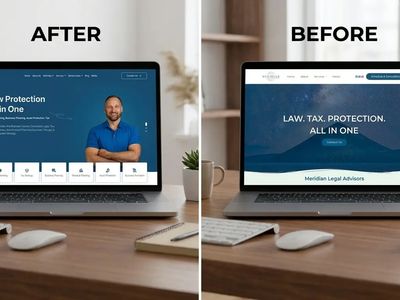
Meridian Legal Advisors
We gave their website a complete overhaul which improved credibility, clarified services, and streamlined the conversation of clients with a structured and user-friendly layout.

StoneBridge Law Firm
A conversion-focused personal injury law firm website designed to build trust, simplify urgent user journeys, and guide visitors toward legal consultation through modern UX, strong visual hierarchy, and credibility-driven design.

Frequently Asked Questions About Content Marketing for Law Firms
Still have questions? Contact our team via ask@timetechnologiesllc.com
How much does law firm content marketing cost?
It depends on volume and scope: how many pieces per month, how competitive your practice areas are, and whether we are building from zero or fixing what exists. After the free content audit, you get a fixed monthly quote that covers the plan, the writing, the review process, and the reporting. No surprise extras.
How long does content take to rank?
On an established website, individual pieces often show movement in 2 to 4 months. On a newer site, expect longer. Content compounds: each piece that ranks makes the next one easier. What does not work is publishing for two months and quitting. We set realistic expectations for your domain in the audit.
Who writes the content?
Writers who work only on law firm content, reviewed by attorneys before anything goes live. You can meet the team behind the work before you commit. Your attorneys always have final sign-off, so nothing publishes that you have not approved.
Do you use AI to write content?
Honestly, yes, for research and outlines, and openly. Every word that publishes is written by human legal writers and reviewed by attorneys. Google's standard is helpfulness, not the tool used, and unreviewed mass-produced AI content fails that standard. Our process is built so your content passes it.
How often should a law firm publish new content?
Consistency beats volume. Two to four well-researched, attorney-reviewed pieces a month outperform ten thin ones, and a cadence you can sustain beats a burst that dies. The right number for your firm depends on your practice areas and how much ground your competitors have covered, which the audit shows.
Do you do the keyword research?
Yes. The content audit includes a full keyword map: what your clients search, what you rank for now, what your competitors rank for, and which searches are winnable first. You approve every topic before we write it.
What is the difference between content marketing and blogging?
Blogging is one format. Content marketing is the whole system: practice-area pages, blog posts, guides, FAQs, whitepapers, and email, each mapped to a stage of your client's journey and to a keyword. A blog without the system is just a diary. The system is what turns readers into clients.
Can you write for my practice area?
Yes. We write for family law, personal injury, criminal defense, bankruptcy, and immigration firms, and every piece passes review by attorneys who check the legal accuracy. If your practice area is not listed, ask us in the audit.
Do I own the content you write?
Yes. Every word, every draft, every keyword map, yours forever. Some agencies treat your content library as leverage to keep you subscribed. We do not. If we ever part ways, everything we produced stays with you.
Can you help a small firm with no blog at all?
Yes, and starting clean is an advantage. We begin with your core practice-area pages, then add a small number of high-value posts targeting questions your clients actually search. A small firm with ten strong pieces beats a large firm with a hundred weak ones.
How do you measure content marketing results?
Per piece, not just in aggregate: which pages rank, which keywords they won, how much traffic each brings, and how many consultations each produces. Your monthly report is one plain-language page, and next month's plan is built from what the data says.
What happens after the free content audit?
A 30-minute call walking through the findings: what ranks, what is thin, what is missing, and what your competitors publish that you do not, plus a content plan and fixed pricing if you want the work done. You keep the full audit either way, with no obligation.

MyCase Pricing & Tier Comparison: Pro vs. Advanced for Growing Law Firms

The 15-Point Family Law Marketing ROI Checklist

The Best Legal Intake CRMs for Law Firms in 2026