

Law Firm Website Design That Turns Visitors Into Consultations
Your website is the first consultation a client has with your firm, and most law firm websites lose them in seconds. We design fast, conversion-focused websites with intake built in, content reviewed by attorneys, and one more thing most agencies will not offer: you own everything.

Your website is the first consultation. Most firm websites fail it
Before a client calls you, they visit your website. If it loads slowly, looks like every other firm, or makes them hunt for a way to contact you, they leave and call the next firm on the list. You never know it happened.
We design law firm websites around one job: turning visitors into consultations. Fast pages, clear practice-area structure, trust signals where deciding clients look, and intake built into every page. And when we finish, the site, the code, and the content are yours.
What Your Firm Gets
Every website we build is designed for one outcome: more consultations from the visitors you already get.

Built to Convert, Not Just to Impress
Intake forms, click-to-call, and trust signals sit exactly where deciding clients look. Every practice-area page answers the questions your prospects actually ask, then makes contacting you the easiest next step.

Speed as a Feature
Slow websites lose clients before the first word loads. In our Bick Law LLP case study, load time went from 12 seconds to under 2 with a 100/100 Lighthouse SEO score. That is the standard we build to.

You Own Everything
The website, the code, the content, the data: yours. No rented platforms, no hostage clauses, no starting over if you leave. Some agencies keep your site when you go. We hand you the keys.

Bar-Compliant, Attorney-Reviewed Content
Legal websites are held to Google's strictest quality standard and your state bar's advertising rules. Our content is written by legal specialists and reviewed by attorneys before anything goes live.
Website Design for Your Practice Area
A family law prospect and a criminal defense client need different things from your website. We design for the difference.

Family Law Websites
Divorce and custody prospects compare firms carefully. We build trust fast with clear answers, attorney profiles, and discreet ways to reach you.

Criminal Defense Websites
Clients search in crisis, often at night, on a phone. Your site loads fast, reassures immediately, and puts your number one tap away.

Personal Injury Websites
Injury clients want proof you win cases like theirs. Results, reviews, and free-case-evaluation forms sit front and center.

Bankruptcy Websites
Bankruptcy clients arrive anxious and embarrassed. Plain-language answers and judgment-free messaging turn visits into calls.

Immigration Law Websites
Immigration clients search in multiple languages and time zones. We build multilingual-ready sites with intake that captures every inquiry.

Estate Planning Websites
Estate planning clients are careful and research-driven. Clear navigation, readable design, and strong trust signals carry their decision.

Meridian Legal Advisors: A Complete Website Redesign With Intake Built In


They took the time to understand our goals, listened to feedback, and made thoughtful recommendations that have significantly improved the overall design and user experience.
”How We Build Your Website
A proven approach that delivers results
Website Review and Conversion Audit
We analyze your current site: speed, mobile experience, content, and where visitors drop off. You see exactly what your website is costing you before we propose anything.
Structure and Messaging
We map your site around your practice areas and the questions your clients ask, so every page has a job and no two pages compete.
Design and Build
Custom design built for speed, mobile, and accessibility, with clean code Google can read. No bloated templates, no rented page builders.
Content With Attorney Review
Our legal writers draft every page, your attorneys review for accuracy and bar compliance, and we publish only after your approval.
Launch, Measure, Improve
After launch we track calls, forms, and rankings, then keep improving the pages that matter. Your site gets better after launch, not older.

Find Out What Your Website Is Costing You
Send us your website and we will review it for free: speed, mobile experience, conversion gaps, and how it compares to the firms you compete with. You keep the review either way, with no obligation.

The Law Firm Website Guide: Beyond the Basics
A law firm website is not a brochure. It is your first consultation, your intake desk, and your credibility check, all at once. This guide covers what separates websites that sign clients from websites that just sit there. Open the topics you want to go deeper on.
Why do most law firm websites fail to convert?
The pattern is consistent. The site talks about the firm instead of the client's problem. The contact form is buried three clicks deep. The page loads in eight seconds on a phone. There is no proof: no results, no reviews, no faces. And the content could belong to any firm in any city. A visitor comparing three firms gives each website seconds. The firm that answers their question fastest and makes contact easiest wins the call.
What does a slow website actually cost you?
Most mobile visitors leave a page that takes more than a few seconds to load. For a law firm, every one of those exits is a potential case calling a competitor. Speed is also a ranking factor, so a slow site gets less visibility and converts less of what it gets. In our Bick Law LLP case study, load time dropped from 12 seconds to under 2. Nothing else about the firm changed. The website just stopped turning people away.
Custom build vs templates and rented platforms
Template sites and rented platforms look cheaper until you read the terms. Your site lives on their platform, so leaving means starting over. Your design looks like hundreds of other firms. And the code is bloated, which costs you speed and rankings. A custom build costs more upfront, but you own it outright: the design, the code, and the content. It loads faster, ranks better, and stays yours forever. Our comparison of WordPress vs a custom build breaks down the real five-year cost of each option.
What does conversion-focused intake look like?
Intake is where websites win or lose cases. A conversion-focused site puts a short form and a click-to-call button on every page, asks only for what is needed to start a conversation, confirms instantly, and routes the inquiry to the right person immediately. After hours, an AI chatbot can answer basic questions and capture the lead while your office is closed. Every extra field, every extra click, and every minute of delay costs you signed cases.
Accessibility and bar rules for law firm websites
Law firm websites carry two sets of obligations. State bar advertising rules, built on ABA Model Rule 7.1 (no false or misleading communications) and Rule 7.2 (specific rules on fields of practice and specialization claims), cover what you can claim: no guaranteed outcomes, care with words like 'specialist', and required disclaimers. Accessibility standards (ADA and WCAG) cover who can use your site: readable contrast, keyboard navigation, alt text, and forms everyone can complete. We build for both from the start, and your attorneys review all content before launch.
How do you redesign a website without losing rankings?
A redesign done carelessly can erase years of SEO. The risks are changed URLs without redirects, deleted pages that still rank, and new content that drops the keywords your old pages won. Our redesigns start with a full map of your existing rankings. Every valuable URL is preserved or redirected, every ranking page's keywords carry over, and the new structure gives Google more to rank, not less. That is how a redesign lifts traffic instead of resetting it. It is also why our website work pairs naturally with our SEO for law firms service.
Featured case studies
Real firms, real numbers. See what a conversion-focused website delivered.

A Case Study For Bick Law LLP
We built a high speed law firm website demo with built-in lead qualification and Clio-integrated client portal, improving efficiency and reducing paralegal costs.

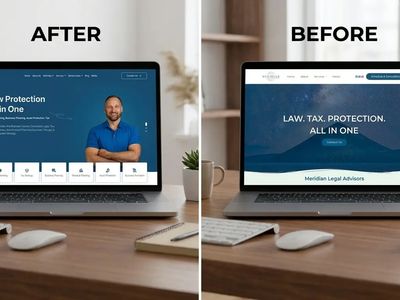
Meridian Legal Advisors
We gave their website a complete overhaul which improved credibility, clarified services, and streamlined the conversation of clients with a structured and user-friendly layout.

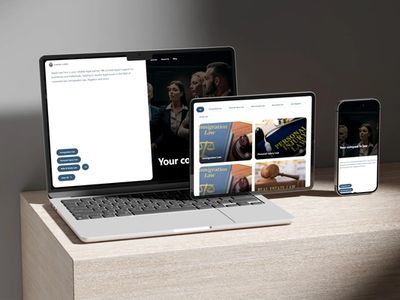
StoneBridge Law Firm
A conversion-focused personal injury law firm website designed to build trust, simplify urgent user journeys, and guide visitors toward legal consultation through modern UX, strong visual hierarchy, and credibility-driven design.
Frequently asked questions about law firm website design.
Still have questions? Contact our team via ask@timetechnologiesllc.com
How much does a law firm website cost?
It depends on scope: how many practice areas you need covered, whether it is a full custom build or a focused redesign, and how much content we write. What we can tell you upfront: you get a fixed quote after the free website review, with no surprises later. And because you own the site outright, you are comparing a one-time investment against platforms that charge you rent forever.
How long does it take to build a law firm website?
A focused redesign moves fastest when content approvals are quick, since attorney review is usually the longest step. A full custom build takes longer, because structure, design, content, and compliance all happen in sequence. After the website review, we give you a firm timeline with milestones, so you always know what ships when.
Will I lose my search rankings during a redesign?
Not if the redesign is done properly. We map every URL that ranks before touching anything, preserve or redirect every valuable page, and carry your winning keywords into the new structure. Most redesigns we finish come out stronger, because the new site gives Google more to rank. The guide section above explains the full process.
Who owns the website when the project ends?
You do: the design, the code, the content, and the data. Everything is built in accounts and repositories you own. If we ever part ways, you keep it all. Compare that with rented platforms and template agencies, where leaving means losing your site and starting over.
What platform do you build on?
We build custom websites on modern frameworks (Next.js with the Sanity CMS), the same stack we used to rebuild Zahid Law's website after their old one was hacked. You own the code, pages load fast, and your team can edit content without calling a developer. No rented page builders, no bloated themes.
Do you write the content, or do we?
We write it. Our legal writers draft every page for Google's strict YMYL standard, and your attorneys review for accuracy and bar compliance before anything goes live. You approve, we publish. Your team spends hours, not weeks, on content.
Do you redesign existing sites or only build new ones?
Both. Redesigns start with a full map of your current rankings and content, so nothing valuable is lost. When Zahid Law's site was hacked, we recovered their content and rebuilt the platform from scratch. Whether your site needs rescue or replacement, the first step is the same free website review.
How do you make sure the website converts?
By designing for intake first: short forms and click-to-call on every page, trust signals where deciding clients look, and after-hours lead capture. Then we measure. In our Bick Law LLP case study, the rebuild cut load time from 12 seconds to under 2, reached a 100/100 Lighthouse SEO score, reduced spam enquiries by 96%, and eliminated intake leakage.
Is the website compliant with accessibility and bar rules?
Yes. We build to WCAG accessibility standards (contrast, keyboard navigation, alt text, accessible forms) and write content to your state bar's advertising rules: no outcome guarantees, careful use of titles like 'specialist', and required disclaimers. Your attorneys review everything before launch.
Can you build a website for a solo or small firm?
Yes. A small firm does not need a big website. It needs a fast one with a few strong pages: each practice area, your story and proof, and intake that works after hours. We build the right size site for where you are now, structured so you can add pages as the firm grows.
What happens after launch?
We track calls, forms, and rankings, and we keep improving the pages that matter. Many firms pair the new website with our SEO for law firms work so the site we built keeps climbing. And whatever you choose next, the website, the code, and the content stay yours.
What happens after the free website review?
A 30-minute call walking through the findings: your site's speed, mobile experience, conversion gaps, and how it compares to competing firms, plus a fixed scope and price if you want the work done. You keep the full review either way, with no obligation.

MyCase Pricing & Tier Comparison: Pro vs. Advanced for Growing Law Firms

The 15-Point Family Law Marketing ROI Checklist

The Best Legal Intake CRMs for Law Firms in 2026