

Capture the divorce search funnel—from initial research to hiring a family lawyer.
In your city, prospects are searching “how does divorce work” tonight. By answering their questions early, your firm builds the trust necessary to be the one they call when they are ready to retain counsel. Family law SEO allows you to guide their entire decision-making process.
With the industry’s broadest keyword universe covering divorce, custody, and adoption, most firms only target “ready-to-hire” searches. We build SEO infrastructure that captures the entire funnel, ensuring you engage prospects before your competitors even appear.

Family law SEO is not the same as regular SEO
Google applies strict E-E-A-T guidelines to legal content, meaning generic posts won't outrank established authorities. Most agencies fail family law firms by applying a one-size-fits-all strategy. Success in this practice area requires addressing three specific factors: keyword breadth, extended research timelines, and the need for high-level emotional calibration. First, family law generates more diverse search volume than criminal defense, bankruptcy, and immigration combined. A handful of general pages won't suffice. To capture the full market, firms need dedicated pages for every specific case type—from contested divorce to post-decree modifications—ensuring coverage across the entire broad family law search universe. Second, family law prospects typically research for weeks before choosing an attorney. By providing deep informational content at the start of their journey, you build trust and authority. If your site answers their early-stage questions, they are far more likely to retain your firm when they finally transition from research to hiring. Third, tone is a measurable conversion lever. Prospects facing marital dissolution or custody battles are in distress; aggressive or clinical content drives them away. We calibrate content to be authoritative yet empathetic. This balanced approach reduces bounce rates and significantly increases the rate of consultation bookings.
WHY OUR FAMILY LAW SEO OUTPERFORMS
Family law SEO requires more than stock photos. We optimize site architecture, content strategy, and conversion paths based on how prospects research over weeks. Our approach accounts for emotional triggers, keyword cannibalization, and state-specific legal variations. While other agencies learn on your time, we built our practice around these specific family law requirements.

Case-type architecture that prevents cannibalization and captures the full keyword universe
Cannibalization occurs when multiple pages compete for the same keyword, splitting rankings. Family law is highly susceptible because terms like "contested divorce" and "uncontested divorce" are semantically linked. Without precise architectural separation, Google cannot determine which page to rank, leading to weak visibility across your entire keyword universe.
We build dedicated pages for every case type: contested/uncontested divorce, legal separation, child custody, spousal support, adoption, and paternity. Each page targets a unique keyword cluster with its own internal linking and conversion path. This structured approach ensures your firm captures the full search market without internal competition.

Full-funnel content that captures prospects from research through retention
Most firms only target "hire now" keywords, ceding high-volume informational traffic to aggregators like Avvo. We capture prospects early with authoritative content that answers initial questions about state laws and procedures. By providing value during the research phase, we build the trust necessary to move prospects through the funnel.
Our full-funnel architecture uses deep content and internal linking to guide researchers toward consultation. When a prospect finds accurate, attorney-authored information on your site, they stop shopping and start trusting. We guide them from informational top-of-funnel queries to transactional bottom-funnel actions, ensuring they call your firm when they are ready to retain counsel.

Emotionally calibrated content that converts without exploiting
In family law, tone is a measurable conversion lever. While urgency works for criminal defense, family law requires empathy and calibration. How you speak to prospects in distress directly impacts your consultation booking rates.
Aggressive or clinical language drives distressed prospects away. Our team uses an authoritative yet empathetic tone that reduces anxiety by normalizing the legal process. By providing clear expectations instead of sales pitches, our emotionally calibrated pages convert at two to three times the rate of generic legal marketing content.

State-specific legal accuracy in every page
Family law is state-governed, making generic content useless. Property division, custody standards, and alimony formulas differ fundamentally across jurisdictions. A Texas prospect needs to know about community property, not equitable distribution.
Every page we build references your specific state statutes and local court procedures. This jurisdictional precision builds trust with prospects and sends strong topical relevance signals to Google. By using specific statutory references, we satisfy both the user's need for accuracy and the algorithm's preference for expert, localized content.
SEO strategies built for your family law practice
Every family law case type requires a specific SEO strategy calibrated to its unique keyword universe, competitive density, emotional intensity, and conversion timeline. We build case-type-specific SEO to match search intent and emotional state, capturing clients precisely when they need representation.

Contested divorce SEO
This is the highest-value keyword cluster, targeting litigation prospects with complex needs (e.g., property division, child custody, spousal support). Our content addresses discovery, temporary orders, and state statutory frameworks. The conversion element emphasizes attorney credentials and litigation experience—they hire for competence, not price.

Uncontested divorce SEO
This cluster has high search volume but lower case value. Prospects often question if they need a lawyer. We build content that respects their budget while demonstrating how attorney guidance prevents future costly mistakes (e.g., in property waivers or custody agreements). The conversion path highlights transparent pricing and the specific value of the initial meeting.

Child custody and custody modification SEO
This segment carries the highest emotional intensity. We build separate, emotionally sensitive pages for initial custody, custody modification, relocation, and enforcement. The content balances legal authority with empathy, explaining best-interest factors and the process to reduce prospect anxiety, avoiding combative language. Modification pages target the distinct "changed circumstances" threshold.

Spousal support and alimony SEO
Since calculations vary dramatically by state, we provide jurisdiction-specific content covering calculation methods and formulas, duration factors, and modification triggers. We also address the distinction between temporary/permanent support and recent tax implications (post-TCJA). The content serves both payor-side and recipient-side queries.

Adoption and paternity SEO
These distinct clusters serve prospects with different emotional states. For Adoption (stepparent, private, foster care, international), the tone is warmer and encouraging. For Paternity (voluntary acknowledgment, contested DNA testing), the tone is informational and neutral, focusing on establishing rights and obligations.
Our Family Law SEO Process
A strategic, four-stage approach to legal market dominance.
SEO audit & case-type funnel mapping
We audit technical health, case-type gaps, and competitor architectures. You receive a prioritized roadmap and a keyword map covering the full addressable family law search universe, calibrated to your specific practice and market.
Case-type architecture & full-funnel content planning
We design site architecture with dedicated pages per case type to eliminate keyword cannibalization. Our plans route prospects through the research funnel—from informational queries to transactional consultation bookings.
Content production & on-page optimization
Our team produces state-specific, attorney-authored content optimized with LegalService and FAQ schema. We calibrate the tone to be authoritative and empathetic, ensuring high conversion rates for distressed prospects.
Authority building & ongoing optimization
We build authority through E-E-A-T-compliant publishing and niche backlinks. Monthly reports track case-type rankings and funnel progression, while quarterly refreshes keep content current with legislative changes.

Ready to stop losing cases to competitors?
Tell us your case types and target markets — we’ll show you exactly what a first-page ranking strategy looks like for your firm. Whether you handle contested divorce in Dallas, custody disputes in Miami, adoption in Charlotte, or the full spectrum of family law in any market, we’ll build a custom SEO roadmap for your competitive landscape. No generic audits. No recycled playbooks. A custom keyword analysis, case-type architecture, and full-funnel content plan built for your practice, your jurisdictions, and your competitors.

What makes SEO for family law different from general SEO
Search engine optimization for family law firms operates with the broadest keyword universe in legal, the longest research-stage conversion funnel outside of immigration, the most emotionally sensitive content requirements of any practice area, and a cannibalization risk that destroys rankings when the site architecture is not precisely designed. Below we explain each of these dimensions so you can evaluate whether your current SEO approach is addressing them.
Why does family law have the broadest keyword universe of any legal practice area, and what does that mean for your site?
Family law covers more distinct legal proceedings than any other practice area, and each proceeding generates its own search query set. Contested divorce, uncontested divorce, legal separation, child custody, custody modification, visitation, spousal support, child support, stepparent adoption, private adoption, foster care adoption, international adoption, paternity, prenuptial agreements, postnuptial agreements, property division, qualified domestic relations orders, and post-decree modifications — each is a distinct topic with its own keyword cluster, its own prospect profile, and its own information requirements.
Our keyword research across SEO, PPC, web design, and social media keyword sets shows over 6,700 monthly searches in the family law universe. This exceeds criminal defense, bankruptcy, and immigration combined. The practical implication is that family law firms need more pages to capture their addressable search universe than any other practice area. A firm with five pages covering “divorce,” “custody,” “support,” “adoption,” and “prenups” is capturing perhaps 30 to 40 percent of available search volume, because each of those pages is trying to serve multiple distinct case types with general content instead of targeting each case type with a dedicated page.
The keyword breadth also means that family law SEO investments compound faster and longer than narrower practice areas. In bankruptcy, you are targeting two to three chapters. In criminal defense, five to seven charge types. In family law, there are twelve to eighteen distinct case types and sub-types to build pages for, each capturing an incremental slice of search volume. Every new case-type page you publish adds to your total organic traffic. This compounding dynamic is why family law is one of the highest long-term ROI practice areas for SEO — the keyword universe is large enough to support years of incremental page building, with each page delivering measurable additional traffic and case inquiries.
How does the emotional dimension of family law directly affect SEO performance metrics?
Family law is the only legal practice area where content tone is a directly measurable conversion lever. Not a stylistic preference. Not a “nice to have.” A performance variable that moves bounce rate, time-on-page, and consultation booking rate by factors of two to three.
The mechanism is straightforward. Family law prospects are in emotional distress. They are contemplating or going through a divorce, fighting for time with their children, or navigating the financial upheaval of ending a marriage. They arrive on your website in a state of anxiety, grief, fear, or anger — often all four simultaneously. The content they encounter either reduces that anxiety or amplifies it. Content that reduces anxiety — by providing clear information about what to expect, normalizing the legal process, explaining the timeline and the steps, and demonstrating that the attorney understands both the legal and emotional dimensions of what the prospect is facing — earns trust, keeps the prospect on the page, and moves them toward consultation booking. Content that amplifies anxiety — through aggressive language (“fight for what’s yours”), urgency pressure (“call now before it’s too late”), or emotionally manipulative framing (“don’t let them take everything”) — triggers a defensive emotional response, increases bounce rate, and drives the prospect to a competitor whose content feels safer.
The performance data is consistent across our family law clients. Pages with emotionally calibrated content — authoritative, informative, empathetic, and measured in tone — convert at two to three times the rate of pages that use standard legal marketing language. The time-on-page is 40 to 60 percent higher. The bounce rate is 20 to 30 percent lower. These are not subtle differences. They are the difference between a page that generates five consultations per month and a page that generates fifteen. Tone calibration is a ranking factor indirectly, because Google uses engagement signals like bounce rate and dwell time as quality indicators. But it is a conversion factor directly, and in a practice area where the keyword universe is large enough to generate significant traffic, conversion rate is where the ROI lives.
Why is case-type cannibalization the most common family law SEO failure, and how is it prevented?
Cannibalization occurs when two or more pages on your site compete for the same keyword, splitting Google’s ranking signals so that neither page performs as well as a single focused page would. Every practice area faces some cannibalization risk, but family law is uniquely susceptible because the case types are semantically related in ways that confuse Google’s topic clustering algorithm unless the site architecture is precisely designed.
The most common cannibalization pattern is between a general /divorce/ page and a /contested-divorce/ page. Both pages contain the word “divorce” prominently. Both discuss divorce process, filing requirements, and legal grounds. Google cannot determine which page should rank for “divorce lawyer near me” — the general page or the contested-specific page? The ranking signals are split, and both pages rank lower than either would rank alone. The identical pattern occurs between /child-custody/ and /custody-modification/ (both contain “custody”), between /spousal-support/ and /alimony/ (same topic, different terms), between /divorce/ and /legal-separation/ (closely related but legally distinct proceedings), and between /child-support/ and /spousal-support/ (both contain “support”).
The fix is architectural, not on-page. Simply adding different title tags or changing the keyword density on competing pages does not resolve cannibalization — the structural competition between pages persists regardless of surface-level optimization. The solution is to design the architecture so that each case-type page targets a keyword cluster that is distinct from every other page’s target, with internal linking that reinforces the topical distinction. The general /family-law/ hub page links down to each case-type page with descriptive anchor text. The hub ranks for broad terms. Each case-type page ranks for specific terms. Internal links between case-type pages use anchor text that differentiates the topics rather than blurring them. This architecture prevents cannibalization by giving Google clear signals about which page is the most relevant for which query, and it maximizes total keyword capture by ensuring every case type has its own dedicated ranking infrastructure.
How does the family law conversion funnel differ from other practice areas, and why does it matter for SEO?
The family law conversion funnel is wider at the top, longer in the middle, and narrower at the bottom than any other legal practice area except immigration. Understanding this shape is critical for building an SEO strategy that captures the full value of your organic traffic rather than targeting only the bottom-funnel prospects who are already ready to hire.
At the top of the funnel, prospects search for informational content: “how does divorce work in [state],” “what happens to the house in a divorce,” “how is child custody decided,” “what is the difference between legal separation and divorce.” These queries have the highest volume in the family law keyword universe and the lowest conversion intent per visit. Most firms either ignore them entirely — leaving the traffic to Avvo, Nolo, and FindLaw — or produce thin FAQ pages that answer the question superficially without building enough trust or topical authority to move the prospect further down the funnel.
At the middle of the funnel, prospects compare and evaluate: “contested vs uncontested divorce cost,” “how much does a divorce lawyer charge,” “best divorce attorney [city] reviews,” “what should I look for in a custody lawyer.” These queries indicate that the prospect has decided to hire but is evaluating options. Content at this stage must differentiate your firm from competitors on criteria the prospect cares about: case-type expertise, relevant credentials, process transparency, and cost clarity.
At the bottom of the funnel, prospects are ready to hire: “divorce lawyer near me,” “child custody attorney [city],” “book consultation with family lawyer.” The conversion element at this stage must be low-friction: a consultation request form with minimal fields, a click-to-call button, and a clear description of what the prospect will receive from the initial consultation. If your SEO strategy only targets bottom-funnel queries, you are competing for the smallest and most competitive segment of the search universe. If you build the full funnel — informational content at the top, evaluative content in the middle, transactional content at the bottom, connected by internal links that guide the prospect through the journey — you capture prospects at the stage when they are first starting to research and guide them to retention on your site. The competitor who captures the prospect’s first informational search has a structural advantage over every firm that only appears at the transactional stage.
Featured case studies
Tailored strategies that address the unique challenges of your practice area

A Case Study For Bick Law LLP
We built a high speed law firm website demo with built-in lead qualification and Clio-integrated client portal, improving efficiency and reducing paralegal costs.

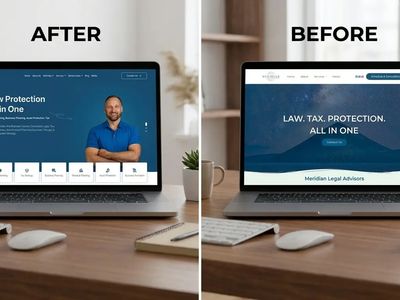
Meridian Legal Advisors
We gave their website a complete overhaul which improved credibility, clarified services, and streamlined the conversation of clients with a structured and user-friendly layout.

StoneBridge Law Firm
A conversion-focused personal injury law firm website designed to build trust, simplify urgent user journeys, and guide visitors toward legal consultation through modern UX, strong visual hierarchy, and credibility-driven design.

Frequently asked questions about family law SEO
Still have questions? Contact our team via ask@timetechnologiesllc.com
How long does SEO take for a family law firm?
It depends on your case types and market. Case-type-specific pages in mid-competition markets typically reach page one within four to six months. Highly competitive metro markets like Miami, Dallas, Houston, and Los Angeles may require six to ten months for primary keywords like “divorce lawyer near me.” Informational content targeting top-of-funnel queries often ranks faster because the competition for those keywords is lower. We set timelines per case type and per funnel stage based on your competitive landscape.
Do you write the content or does our firm?
Both. Our content team drafts case-type-specific content under your attorneys’ names. Our family law content specialists handle the tone calibration that is critical for this practice area. Your attorneys review each page for legal accuracy, state-specific precision, and ethical compliance before publication. Average attorney time commitment is one to two hours per case-type page. We handle production, research, SEO optimization, schema, and emotional tone. Your attorneys provide the legal accuracy and sign-off.
How do you handle the emotional tone of family law content?
Our family law content team is specifically trained on the tone calibration that converts in this practice area. We do not use aggressive language, urgency pressure, or emotionally manipulative framing. Every page is written to reduce the prospect’s anxiety, not amplify it — providing clear information, normalizing the process, and demonstrating empathy through substance rather than through formulaic sympathy statements. Tone calibration is reviewed at the editorial level before attorney review, and we track bounce rate and conversion rate per page to measure whether the tone is performing.
Do you guarantee first-page rankings?
No. No legitimate SEO agency can guarantee specific ranking positions. We guarantee process: defined deliverables per month, measured progress against case-type-specific ranking targets, quarterly content refreshes to track legislative changes, and full transparency on performance. If a strategy is not producing expected results, we diagnose and adjust immediately rather than waiting for a quarterly review.
How much does family law SEO cost?
Family law retainers are typically mid-range in our pricing structure. The content is English-only, which reduces production complexity compared to immigration. But the breadth of the keyword universe — over 6,700 monthly searches across twelve to eighteen case types — means more pages are needed than in criminal defense or bankruptcy. We quote on a per-firm basis after the audit based on the number of case types you handle, the number of markets you target, and the current state of your site’s content and technical health.
What case types do you cover?
All of them. Contested divorce, uncontested divorce, legal separation, child custody, custody modification, visitation, spousal support, child support, adoption (stepparent, private, foster care, international), paternity, prenuptial agreements, postnuptial agreements, and post-decree modifications. If your firm handles it, we build a page for it.
Can you help with Google Business Profile and local SEO?
Yes. We optimize your Google Business Profile for your office locations, build citation consistency across 50+ legal directories, and structure local SEO signals for every jurisdiction in your service area. For family law, local SEO is important because prospects search with geographic modifiers — “divorce lawyer [city],” “custody attorney near me” — and Google’s local pack results drive significant consultation traffic from mobile searches.
What do your monthly SEO reports include?
Rankings per case-type keyword cluster organized by funnel stage, organic traffic by page and by case type, consultation-form submission analytics, content published that month with performance metrics, backlinks acquired with source attribution, funnel progression data showing how prospects move from informational to transactional pages, and a legislative watchlist flagging any state-level changes to family law statutes that require content updates.

MyCase Pricing & Tier Comparison: Pro vs. Advanced for Growing Law Firms

The 15-Point Family Law Marketing ROI Checklist

The Best Legal Intake CRMs for Law Firms in 2026