

SEO for Law Firms That Turns Searches Into Signed Cases
People looking for a lawyer search with urgency, and they call the firms they find first. As a law firm SEO company, we put your practice at the top of those searches with practice-area pages, local rankings, and content built for Google's strict legal standards. You get a steady flow of qualified cases, not empty traffic.


SEO built for law firms, not adapted from other industries
Most agencies run the same SEO playbook for every industry. That fails in legal search. Google holds law firm websites to its strictest quality standards, and your potential clients compare several firms before they call anyone.
We build your SEO around how people actually hire a lawyer: by practice area, by city, and by urgency. Every page on your site has a job, and every report shows which cases came from search.
What Your Firm Gets
Every part of our SEO work is built for one outcome: more of the right cases finding your firm.

Practice Area Pages That Rank
We build a dedicated page for each practice area you want to grow, mapped to the terms your clients actually search, from early questions to 'hire a lawyer' searches. Each page is built to rank and to convert.

Local SEO That Wins Your City
Most legal clients hire close to home. We optimize your Google Business Profile, local pages, and reviews so your firm appears in the map pack when someone nearby needs a lawyer.

Content Built for Google's Legal Standard
Google reviews legal content under its strictest quality rules. Our content is accurate, specific, and written to meet that bar, where generic agency content cannot.

Reporting Tied to Signed Cases
Traffic alone pays nothing. We track rankings, calls, and form fills back to the exact keyword and page, so you always know what your SEO budget earns.
SEO for Your Practice Area
Every practice area has its own search behavior, competition, and client urgency. We build a strategy for yours.

Family Law SEO
Divorce, custody, and support searches carry high urgency. We position your firm for the families looking for help right now.

Personal Injury SEO
The most competitive practice area in search, and the most valuable. We build the authority your firm needs to compete for high-value cases.

Immigration Law SEO
Immigration clients search in multiple languages and locations. We build visibility that reaches them wherever they are.

Criminal Defense SEO
Clients search in crisis, often late at night. We make sure your firm is the one they find and call first.

Bankruptcy Law SEO
Bankruptcy clients search with urgency and anxiety. We position your firm as the clear, trustworthy answer.
Estate Planning SEO
Estate planning clients research carefully before they commit. We build the educational content and rankings that win their trust over time.

Meridian Legal Advisors: A Complete Website Redesign With Intake Built In


They took the time to understand our goals, listened to feedback, and made thoughtful recommendations that have significantly improved the overall design and user experience.
”How We Build Your Rankings
A proven approach that delivers results
SEO Audit and Competitor Gap Analysis
We crawl your site, check over 200 ranking factors, and map where your top 5 competitors win. You see exactly where the gaps are and what it takes to close them.
Keyword and Architecture Map
Every valuable search term in your market gets assigned to a page: practice areas, cities, and case types. No two pages on your site compete for the same search.
Technical Foundation
Speed, mobile usability, schema, and crawlability come first. Google cannot rank a page it cannot read, and clients will not wait for a slow site.
Content and Authority Building
Practice-area pages, supporting articles, and links from legal and local sources, published on a steady schedule that compounds month after month.
Measurement by Signed Cases
Rankings, calls, and form fills are tracked back to the exact keyword and page. You know which cases came from search and what each one cost.

See What Page One Is Worth in Your Market
Tell us your practice area and target cities. We will show you the keywords your competitors rank for, where your firm stands, and what a first-page strategy looks like for you. It is a free 30-minute strategy session, with no commitment.

The Law Firm SEO Guide: Beyond the Basics
Good SEO is not magic, and it is not a secret. It is a set of disciplines done well, in the right order, for the right searches. This guide covers how each one works for a law firm, and why legal content is held to a higher standard than any other industry. Open the topics you want to go deeper on.
How does SEO work for every type of law firm?
Solo attorneys and small firms do not need to outspend big firms. They need to out-focus them. A solo family lawyer wins by owning a handful of valuable searches in one city. A growing firm of 5 to 15 lawyers wins by adding practice-area and city pages one at a time, compounding month over month. A mid-sized firm with an older website usually wins fastest by fixing technical debt and consolidating pages that compete with each other. The strategy session identifies which situation you are in, and the plan follows it.
Keyword research: find out what your clients actually search for
Lawyers and clients use different words. Attorneys say 'dissolution of marriage'; clients search 'divorce lawyer near me'. We research how real clients in your market describe their problem at every stage: early questions like 'what happens after a DUI arrest', comparison searches like 'best family lawyer in Houston', and hiring searches like 'personal injury attorney free consultation'. Every keyword is assigned to exactly one page, so your pages never compete with each other.
Technical SEO: fix the problems that stop Google from showing your pages
Google cannot rank a page it cannot read, and clients will not wait for a slow one. Crawlability, mobile usability, site speed, schema markup, and internal linking come first, because every other investment sits on this foundation. In our Bick Law LLP case study, this work took page load time from 12 seconds to under 2 and lifted the Lighthouse SEO score to 100/100. Technical health is not glamorous, but it is where rankings are won or lost.
Local SEO: show up on the map when clients search nearby
Most legal clients hire close to home, and the map pack sits above every organic result. We optimize your Google Business Profile, build consistent citations across legal and local directories, help you earn reviews, and create city pages for the markets you want to win. For many firms, the map pack alone is the highest-converting position in search, and it is winnable faster than national terms.
SEO content marketing: answer the questions your clients type into Google
Every day, people in your market ask Google questions about their legal problems. Each answer you publish is a page that can rank, build trust, and end in a call. Because legal content falls under Google's YMYL standard, ours is written by specialists who work only on law firm content and reviewed by attorneys before it goes live. That is what lets it rank where generic agency content cannot.
Link building: earn the authority Google needs to rank your firm
Google treats links from other websites as votes of confidence. For law firms, the links that matter come from legal directories, local publications, bar resources, and genuinely useful content that people cite on their own. We earn them through digital PR and linkable assets, never through purchased links or schemes, which put your entire site at risk under Google's spam policies.
Why are legal keywords so expensive in paid search?
Legal keywords carry some of the highest cost-per-click rates in paid search. Personal injury terms routinely exceed $150 per click, criminal defense terms like 'DUI lawyer near me' run $80 to $120, and even bankruptcy and family law terms sit at $30 to $80. Ranking organically for these terms does not just drive traffic. It directly offsets five- and six-figure monthly ad budgets, which is why SEO compounds in value the longer it runs.
Why does jurisdictional precision matter for law firm SEO?
Legal SEO demands jurisdictional precision. A personal injury firm in Miami competes against a completely different set of competitors than one in Dallas. A criminal defense firm in Houston needs content about Texas Penal Code sections that are irrelevant in Georgia. An immigration firm near the Miami consulate targets different visa categories than one near the Los Angeles consulate. Cookie-cutter national strategies fail because they ignore this geographic and legal specificity.
How does conversion behavior differ across practice areas?
Each practice area has its own conversion behavior. Criminal defense prospects decide within hours of an arrest. Personal injury clients call within 24 hours of an accident. Bankruptcy prospects research for 2 to 4 weeks before committing. Immigration clients may evaluate firms for months across multiple languages. Family law prospects often search during emotional moments, frequently late at night. Your SEO strategy must match each of these patterns with pages that rank for the right intent and convert with the right urgency.
What does Google's YMYL classification mean for legal websites?
Legal pages advise people on their freedom, their finances, and their families. Wrong or shallow information here causes real harm, so Google instructs its quality raters to hold legal content to its highest standard. That is YMYL. To rank under it, your content must show experience, expertise, authority, and trust (E-E-A-T): accurate legal information, named authors, and review by real attorneys. Generic content from non-specialist writers does not survive this scrutiny. You can read Google's own guidance on helpful, reliable content for the full standard.
Featured case studies
Real firms, real numbers. See what focused legal SEO and smart intake delivered.

A Case Study For Bick Law LLP
We built a high speed law firm website demo with built-in lead qualification and Clio-integrated client portal, improving efficiency and reducing paralegal costs.

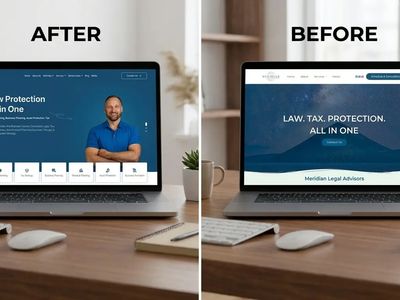
Meridian Legal Advisors
We gave their website a complete overhaul which improved credibility, clarified services, and streamlined the conversation of clients with a structured and user-friendly layout.

StoneBridge Law Firm
A conversion-focused personal injury law firm website designed to build trust, simplify urgent user journeys, and guide visitors toward legal consultation through modern UX, strong visual hierarchy, and credibility-driven design.

Frequently asked questions about law firm SEO
Still have questions? Contact our team via ask@timetechnologiesllc.com
How much does law firm SEO cost?
It depends on your market. Personal injury SEO in a major metro is a bigger fight than family law in a smaller city, and the scope follows the competition. For context, personal injury clicks in paid search routinely exceed $150 each, so organic rankings offset real advertising spend over time. After your free strategy session, you get a custom scope with clear monthly pricing before any work starts.
How long does SEO take for a law firm?
Technical fixes show effect within weeks. Early ranking movement usually appears in 3 to 4 months, and competitive terms in big markets take 6 to 12 months of consistent work. Any agency that promises page one in 30 days is guessing. We show you a realistic timeline for your market in the strategy session, and monthly reports show progress from day one.
Is SEO better than PPC for lawyers?
They do different jobs. PPC buys visibility today and stops the moment you pause it. SEO compounds: the pages and authority you build keep bringing cases month after month. Most firms we work with run both, using PPC and Google Ads for immediate cases while SEO builds the long-term pipeline.
Do you guarantee first-page rankings?
No, and you should not trust an agency that does. Google does not sell guaranteed positions. What we commit to is a transparent process, realistic timelines, and proof you can check. In our Bick Law LLP case study, the rebuild took load time from 12 seconds to under 2, reached a 100/100 Lighthouse SEO score, and cut spam enquiries by 96%. You can read the full case study on our site.
Do you do SEO for solo and small law firms?
Yes. Small firms win by focus, not by budget. A solo attorney does not need to rank for every legal term in the state. You need the handful of searches that bring cases in your practice area and your city, starting with the map pack. We concentrate your budget on exactly those searches, so a small firm can beat a big one where it counts.
Do you do SEO for boutique law firms?
Yes, and boutique firms often have the strongest position in search. A narrow practice focus is an advantage under Google's quality standards, because deep expertise in one area produces exactly the kind of authoritative content that outranks big generalist firms. We build your site's authority around your niche, so you dominate the searches that matter to you instead of competing for everything.
Do you do SEO for large or multi-location law firms?
Yes. Multi-location SEO is an architecture problem: each office needs its own optimized location page, consistent name, address, and phone data across directories, and a structure where your offices never compete with each other for the same search. We build that structure, then report rankings and leads per location, so you can see which offices are winning and which need work.
Can you help a brand-new law firm with SEO?
Yes, with honest expectations. A new firm starts with a new domain and no authority, so page one takes longer than it would for an established firm. The right order is: technical foundation and core practice-area pages first, Google Business Profile and reviews from day one, then supporting content month after month. Many new firms run PPC for immediate cases while SEO builds the long-term pipeline.
Can you help with Google Business Profile and local SEO?
Yes. For most firms, the map pack is the highest-converting spot in search. We optimize your Google Business Profile, build and clean up your local citations, and create city pages where you want to grow. Our local SEO for law firms work is built into every SEO engagement, not sold as an extra.
What practice areas do you specialize in?
We build SEO strategies for personal injury, family law, criminal defense, immigration, and bankruptcy firms. Each practice area has its own search behavior, and the strategy follows it. If your practice area is not listed, ask us in the strategy session.
Do you write the content or does our firm?
We write it, with specialists who work only on law firm content. Because Google holds legal content to its YMYL standard, every page goes through attorney review before it goes live: accurate on the law, compliant with bar advertising rules, and properly attributed. You approve, we publish. You can meet the team behind the work before you commit to anything.
What do your monthly SEO reports include?
One plain-language page: which keywords moved, which pages won, how many calls and form fills came from search, and what we do next. No vanity metrics, no 40-page PDFs nobody reads. You see exactly what your budget produced and what the plan is for next month.
What happens after I book a strategy session?
A 30-minute call. We review your current rankings, show you the keywords your competitors win, and outline what a first-page strategy looks like for your practice area and cities. You keep the analysis either way. There is no commitment and no obligation to hire us.
Do you follow Google's guidelines?
Yes. Our work follows Google's Search Essentials and its helpful content guidance: original content written for people first, clear authorship, accurate sourcing, and clean technical foundations. We do not use link schemes, keyword stuffing, or mass-produced AI content, the shortcuts that get law firm websites penalized. Rankings built on Google's rules take longer to win, but they do not disappear with the next algorithm update.
Will my website, content, and data stay mine?
Yes. Everything we build for your firm is yours: the website, the content, the analytics, and the lead data. Some agencies keep your site or your data when you leave, which forces you to start over or stay locked in. We do not work that way. You own every asset from day one, and if we ever part ways, everything stays with you.
How do I choose an SEO agency for my law firm?
Ask five questions. Do they work only with law firms, or is legal one tab among fifty? Can they show real numbers from real firms, not vague promises? Will you own your website, content, and data? Do they report on signed cases or just traffic? Do they guarantee rankings, which no honest agency can? Any agency worth hiring answers all five clearly. Ask us these exact questions in your strategy session.
Will you work with my competitors in my market?
No. We limit client partnerships by geographic market. We never run competing acquisition campaigns for two firms targeting the same local market, so your budget never fights another firm backed by us.

MyCase Pricing & Tier Comparison: Pro vs. Advanced for Growing Law Firms

The 15-Point Family Law Marketing ROI Checklist

The Best Legal Intake CRMs for Law Firms in 2026