Back to Solutions
SEO for Criminal Defense Lawyers

Rank when arrests happen. Convert before the bond hearing.

When someone is arrested, they search for a "DUI lawyer near me" at 2 AM from a jail parking lot. Criminal defense has the shortest conversion window; 90% of prospects retain an attorney within 24 hours of their first search. If your firm is not ranking when that search happens, you lose the case. We build charge-specific SEO infrastructure for criminal defense firms that ranks for every charge type you handle, in every jurisdiction, with 24-hour conversion systems to capture leads around the clock.

Criminal defense SEO is not the same as regular SEO

Google applies strict E-E-A-T (Experience, Expertise, Authoritativeness, and Trustworthiness) guidelines to legal content. Generic posts often fail to outrank established legal directories. While most agencies apply standard SEO to criminal defense, this approach fails to account for the unique search behaviors and high-stakes urgency inherent in the practice. Unlike other legal areas, criminal defense prospects operate under extreme pressure. This urgency compresses the marketing funnel into minutes. There is no comparison shopping; prospects typically retain the first credible attorney who answers the phone at 2 AM. Effective SEO must target charge-specific landing pages—matching queries for DUI, drug possession, or federal indictments—with instant conversion paths. Our strategy leverages jurisdictional precision, ensuring content aligns with specific state and county legal frameworks to drive immediate engagement.

Results
Avg. organic traffic increase320%
Avg. time to page 14.2 Months
After-hours lead capture rate3x
Criminal Defense SEO Specialists

WHY OUR CRIMINAL DEFENSE SEO OUTPERFORMS

Criminal defense search optimization is not general SEO with a gavel icon added to the homepage. Every decision — site architecture, content strategy, conversion infrastructure, schema implementation — requires an understanding of how criminal defense clients search, how urgency compresses the decision window, and how jurisdictional specificity affects both rankings and conversion rates. Most agencies learn this on your retainer. We built our entire criminal defense SEO practice around it.

Charge-specific page architecture that ranks for every case you handle

A prospect arrested for DUI searches for "DUI lawyer near me," while those facing federal investigations search for "federal criminal defense lawyer." These distinct queries with unique search intents mean a single "criminal defense" page cannot rank competitively for all of them. To capture searchers at the moment of crisis, your site must be built around how clients actually search. We build charge-specific landing pages for every case type you handle—including DUI, drug possession, domestic violence, white-collar crimes, and federal offenses. Each page targets specific keyword clusters with jurisdiction-precise content, procedural info, and penalty ranges. This architecture ensures your DUI page ranks for DUI queries and your drug page for drug queries, eliminating keyword cannibalization and ensuring maximum authoritative relevance for every charge.

24-hour conversion infrastructure built for crisis searches

Criminal defense prospects search during crisis hours (2 AM, midnight, etc.). If your contact form submission waits until morning, the case is lost. We build 24-hour conversion infrastructure to capture leads instantly. This includes mobile-optimized, above-the-fold click-to-call buttons and instant callback forms that fire within minutes. Every element—including after-hours live chat—is designed for zero friction: no multi-step forms, no CAPTCHA. The prospect calls or gets called, completing the entire conversion path.

Jurisdictional clustering by court, county, and state

Criminal law is jurisdiction-governed; state-specific laws mean generic content is useless to a prospect and unrecognized by Google. To rank, your firm needs jurisdiction-specific content at the state, county, and court level. We build content clusters targeting precise queries like "Tarrant County DUI lawyer" and "Northern District of Texas federal defense". This jurisdictional precision—referencing specific statutes, courts, and penalty ranges—proves your firm's local expertise to both Google and potential clients.

E-E-A-T content Google treats as authoritative

We build authoritative E-E-A-T content for the high-stakes YMYL criminal defense category. Every charge-specific page is attributed to a named, credentialed attorney—not "the firm"—and includes their bar admission, defense experience, and board certification where applicable. We implement structured Author schema and inline citations to specific state criminal codes, ensuring Google treats your content as a trusted legal resource rather than burying it below directories like Avvo, Justia and FindLaw.

Get Started

SEO strategies built for your criminal defense practice

Every charge type has its own keyword universe, its own competitive landscape, its own urgency profile, and its own conversion behavior. A family member searching for a DUI lawyer at 2 AM after a traffic stop behaves completely differently from a business owner searching for a white-collar defense attorney after receiving a target letter from the U.S. Attorney’s office, or a parent searching for a juvenile defense lawyer after their teenager’s arrest. We build charge-specific SEO strategies that match search intent to your services — capturing clients at the exact moment they need criminal defense representation.

DUI and DWI defense SEO

DUI and DWI searches are the highest-volume keyword clusters in criminal defense. Queries like “DUI lawyer near me,” “DWI attorney [city],” and “best DUI lawyer” carry extreme urgency, as most searches occur within hours of an arrest. Prospects aren’t researching—they are hiring the first competent attorney who answers the phone. We build state-specific DUI landing pages addressing critical first-minute concerns: state-specific penalties, BAC thresholds, implied consent laws, and license suspension timelines. Each page features jurisdiction-precise penalty tables and 24-hour click-to-call buttons optimized for mobile users searching at 2 AM.

Drug crimes SEO

Drug charges range from simple possession to federal trafficking conspiracies. Each severity level requires a distinct keyword strategy and conversion profile. A student facing a misdemeanor needs different information and budgeting than a defendant facing federal mandatory minimums; your content must address both without conflating their search intent. We build severity-specific pages to clean the keyword architecture. Possession pages target “drug possession lawyer near me,” addressing state drug scheduling, diversion eligibility, and collateral consequences. Distribution pages target higher-stakes queries with content on sentencing guidelines and federal prosecution distinctions. Our jurisdiction-precise approach ensures content reflects local laws—whether handling criminalized possession in Texas or regulated legal use in Colorado.

Domestic violence defense SEO

Domestic violence charges carry critical criminal and collateral dimensions. Beyond immediate penalties and defense strategies, prospects must navigate protective orders, residency restrictions, and child custody consequences. Convictions also impact employment, security clearances, and federal firearms rights. We build domestic violence defense content that addresses this full scope without crossing into family law. Our strategy utilizes split intent paths: urgent 24-hour conversion elements for the accused searching post-arrest, and informational resources for family members researching the legal process. This ensures the right audience receives the necessary call-to-action at their specific moment of crisis.

Theft and white-collar crime SEO

Theft charges and white-collar crime charges sit at opposite ends of the criminal defense spectrum but both require charge-specific SEO. High-volume theft cases (like petty theft) have moderate urgency and require simple procedural guidance. High-value white-collar crimes (e.g., embezzlement, wire fraud, tax fraud) involve extensive research and longer timelines. We build long-form authority content for white-collar charges, demonstrating deep expertise through analysis of specific federal statutes (18 U.S.C. §1341, 26 U.S.C. §7201) and federal sentencing guidelines, to convert high-value prospects under investigation.

Federal criminal defense SEO

Federal criminal defense requires a distinct content architecture and keyword universe. Prospects searching for a “federal criminal defense lawyer” or “federal indictment attorney” face different procedural rules, sentencing frameworks, and courts than those seeking state-level DUI or drug possession help. The higher stakes and pre-indictment investigation stages necessitate a more authoritative conversion approach. We build federal defense pages highlighting specific district court experience, federal sentencing guidelines, and the nuances of federal pretrial detention. Each high-value charge—from healthcare fraud and RICO cases to immigration offenses—gets a dedicated page targeting its specific keyword cluster to demonstrate expertise to both Google and sophisticated prospects.

SEO process built for criminal defense firms

A proven approach that delivers results

1

SEO audit & charge-type mapping

We audit your technical health, charge-type coverage, and jurisdictional precision to identify competitive win-states. Covering 300+ factors—including page speed, mobile usability, and schema—our audit is calibrated to your specific practice area and market. Criminal defense rewards early movers; we provide a prioritized roadmap to help you reach page one faster for your primary keyword clusters.

2

Charge-specific architecture & keyword mapping

We build the complete site architecture and keyword map across all your charge types and jurisdictions before content creation begins. This approach prevents common criminal defense SEO failures by designing a targeted information hierarchy, ensuring your content does not compete against itself. We create dedicated charge-type pages (including DUI, federal offenses, and white-collar crimes) and jurisdiction-specific content for every county you serve, ensuring every offense category is covered.

3

On-page optimization & conversion infrastructure

We implement comprehensive on-page changes, including technical fixes (Core Web Vitals, schema markup) and full 24-hour conversion infrastructure. This system features mobile-optimized, above-the-fold click-to-call buttons, instant callback forms, and after-hours chat routing. We apply specific schema (LegalService, Author) and optimize internal linking with contextual anchor text to build topical authority across charge-type pages (e.g., DUI, drug crimes).

4

Authority building & rapid iteration

We publish monthly E-E-A-T content and build authoritative backlinks from criminal law associations, bar sections, and legal aid networks. Our keyword-mapped content calendar targets specific gaps, driving measurable ranking movement for charge types within 60–90 days. We monitor rankings weekly, providing real-time strategy adjustments and monthly reports on traffic, rankings, and after-hours conversion rates to ensure rapid ROI.

Ready to stop losing cases to competitors?

Tell us your charge types and target jurisdictions — we’ll show you exactly what a first-page ranking strategy looks like for your firm. Whether you handle DUI defense in Houston, drug charges in Dallas, domestic violence in Miami, white-collar crimes in New York, or federal cases in any district, we’ll build a custom SEO roadmap for your competitive landscape. No generic audits. No recycled playbooks. A custom keyword analysis, charge-type architecture, and conversion infrastructure plan built for your practice, your jurisdictions, and your competitors.

What makes SEO for criminal defense different from general SEO

Search engine optimization for criminal defense firms operates under time-pressure constraints, conversion infrastructure requirements, and jurisdictional precision demands that no other legal practice area shares. The 24-hour decision window, the charge-specific nature of every search query, and the geographic specificity of criminal law create a fundamentally different SEO problem than family law, personal injury, bankruptcy, or immigration. Below we explain each of these differences so you can evaluate whether your current approach is equipped to address them.

Book a Consultation

Why does the 24-hour decision window fundamentally change how criminal defense SEO works?

In most legal practice areas, SEO is primarily a content and rankings problem — build the right pages, earn the right authority signals, and traffic converts over days or weeks as prospects research, compare, and eventually contact you. In criminal defense, SEO is equally a conversion infrastructure problem, because the window between search and retention collapses to hours, not days.

When a prospect is arrested at 11 PM on a Friday and a family member searches “DUI lawyer near me” from the jail parking lot, they are not bookmarking pages for comparison on Monday. They are calling the first attorney who appears credible and whose phone actually rings. If your site ranks number one but your contact system routes to voicemail until Monday morning, you lose the case to the firm ranked number four that has a live answering service. The ranking is irrelevant if the conversion infrastructure cannot capture the lead at the moment it arrives.

This means criminal defense SEO success depends on three infrastructure layers that other practice areas do not require at the same urgency level. First, click-to-call buttons must be the primary call-to-action on every charge page, placed above the fold, with mobile-optimized tap targets sized for one-thumb operation — because criminal defense searches happen overwhelmingly on mobile devices, not desktops. Second, callback systems must fire within minutes, not hours. We integrate with answering services that guarantee sub-five-minute response times so that a prospect who submits a callback request at 2 AM receives a return call before they have finished evaluating your competitor’s website. Third, the conversion path must have zero friction: one field for a phone number, one button to request a call. Every additional field you add — every “tell us about your case” text box, every dropdown menu, every CAPTCHA — reduces after-hours conversion rates. The data consistently shows that firms with 24-hour contact infrastructure convert criminal defense organic traffic at three to four times the rate of firms with business-hours-only forms.

Why does criminal defense need separate pages for every charge type instead of one criminal defense page?

The fundamental reason is that every charge type occupies a distinct keyword universe. “DUI lawyer near me” and “embezzlement defense attorney” are not variations of the same search query — they are completely different searches typed by completely different people in completely different situations with completely different information needs. Google treats them as distinct topics and ranks pages that address each topic with dedicated, specific content higher than pages that try to address multiple topics in general terms.

Consider the difference in search behavior. A DUI prospect searches with extreme urgency, typically within hours of arrest, and needs immediate answers about bail, license suspension, and first-appearance procedures. An embezzlement suspect may not even be charged yet — they may have received a target letter from a prosecutor or learned through their employer that an investigation is underway. They are searching for information about investigation timelines, grand jury procedures, and whether to cooperate or assert their Fifth Amendment rights. A domestic violence defendant needs to understand protective order implications and custody consequences. A federal drug conspiracy defendant needs to understand mandatory minimums and cooperation agreements. A single page cannot serve all of these audiences with appropriate content, appropriate tone, appropriate urgency signals, and appropriate conversion elements.

The technical SEO consequence is equally clear. When one page targets “DUI lawyer,” “drug possession attorney,” “domestic violence defense,” “assault charges lawyer,” and “federal criminal defense” simultaneously, Google cannot determine which query the page is most relevant for. The page lacks the topical focus signals that dedicated pages provide — keyword concentration, semantic relevance throughout the full page body, internal linking from related content, and charge-specific schema. A dedicated DUI page that uses DUI terminology throughout, links to other DUI-related content on your site, and includes DUI-specific FAQ schema will outrank a general criminal defense page for DUI queries every time. Run a search for “DUI lawyer” in any major metro and examine the top ten results. The majority are DUI-specific pages, not general criminal defense pages. Charge-specific architecture is not optional. It is what ranking requires.

How does jurisdictional precision affect criminal defense SEO rankings?

Criminal law is entirely state-governed, with a separate federal system for federal offenses. This means that a DUI page that discusses “typical DUI penalties” without specifying which state’s penalty structure provides no useful information to a prospect who needs to know what happens in their county — and Google’s ranking algorithm recognizes the difference between jurisdiction-specific content and generic content.

The specificity required goes deeper than mentioning a state name. Effective criminal defense SEO content references specific criminal code sections — Texas Penal Code Section 49.04 for driving while intoxicated, Florida Statute 316.193 for DUI, California Vehicle Code Section 23152 for DUI with the state-specific BAC thresholds and refusal consequences for each. It references specific administrative procedures — Texas’s Administrative License Revocation process, Florida’s formal review hearing timeline, California’s DMV hearing requirements. And it references specific courts and jurisdictions — Tarrant County Criminal Court, Harris County District Court, Los Angeles County Superior Court — with procedural information relevant to that specific courthouse.

Google’s ranking algorithm for local legal queries uses jurisdictional relevance as a ranking signal. A page that references your state’s specific criminal statutes, your county’s specific court procedures, and your jurisdiction’s specific penalty ranges demonstrates genuine local expertise in a way that a generic “DUI penalties” page cannot. This is not merely about including city names in your content for local keyword optimization. It is about demonstrating through specific statutory references, court-specific procedural knowledge, and county-level penalty details that your firm actually practices criminal defense in this jurisdiction and understands what happens in this courthouse. Firms serving multiple jurisdictions need separate content for each — the Dallas DUI page and the Houston DUI page cannot be the same content with a different city name, because the courts, the prosecutors, the diversion programs, and the sentencing patterns are all different.

Why is criminal defense one of the fastest practice areas to see SEO results?

Criminal defense organic search is less saturated than personal injury, family law, or immigration for a structural economic reason. The largest criminal defense firms have historically concentrated their marketing budgets on paid advertising — Google Ads, Local Service Ads, and directory placements — rather than on organic SEO infrastructure. Personal injury firms invested in organic SEO a decade ago because PI keywords are so expensive on paid search that organic rankings provide enormous economic value in avoided ad spend. Criminal defense keyword costs are lower than PI — DUI clicks typically run 30 to 120 dollars compared to 150 to 400 dollars for car accident and personal injury terms — so the economic incentive to invest in organic has historically been weaker.

This creates a window of opportunity. The competitive bar to reach page one for criminal defense keywords is meaningfully lower than for personal injury or family law in most markets. The firms currently occupying top positions for charge-specific queries often have thin, general criminal defense pages rather than the deep, charge-specific content architecture that Google rewards. A firm that builds a proper charge-specific page architecture with jurisdiction-level content and 24-hour conversion infrastructure can displace these weaker pages within 60 to 90 days for less competitive charge types like drug possession, theft, and white-collar crime, and within four to six months for the most competitive charge type, DUI.

The speed advantage compounds because criminal defense content is English-only in most markets, unlike immigration which requires multilingual production. The total content scope is narrower than family law, which has eight to ten distinct case types to cover. And the conversion feedback loop is faster — because criminal defense clients retain within 24 hours of searching, you see the organic pipeline producing retained cases within weeks of reaching page one, not months. For firms seeking the shortest path from SEO investment to measurable case growth, criminal defense consistently delivers the fastest time-to-results of any legal practice area.

How do bar advertising rules affect what criminal defense firms can publish on their websites?

Bar advertising rules vary by state and impose specific restrictions on what attorneys can say in advertising materials — and in most jurisdictions, websites are classified as advertising. The restrictions most relevant to criminal defense SEO content fall into four categories that directly affect what we can and cannot include on your pages.

First, case outcome claims. Most states prohibit or heavily restrict references to specific case results — acquittals, dismissals, reduced charges, favorable plea agreements — unless accompanied by appropriate disclaimers specifying that past results do not guarantee future outcomes. Some states prohibit specific outcome claims in advertising entirely. We build criminal defense content that demonstrates expertise through process knowledge, statutory analysis, and attorney credentials rather than through outcome claims, which keeps your pages compliant regardless of which state you practice in.

Second, superlatives and comparative claims. “Best criminal defense lawyer in Dallas,” “#1 DUI attorney,” or “top-rated criminal defense firm” are restricted in most states unless substantiated by specific independent rating bodies like Martindale-Hubbell or Super Lawyers, and even then must include disclosure that the designation is an advertising classification, not an independent endorsement. We do not use superlatives in page content, title tags, or meta descriptions.

Third, testimonials. Client testimonials on criminal defense pages are restricted in many states and require specific disclosures. Some states prohibit paid testimonials or actors portraying clients. We structure review and testimonial sections to comply with your specific state’s rules and recommend Google Business Profile reviews as the primary social proof mechanism, since those are controlled by Google’s platform rather than your website’s advertising content.

Fourth, advertising material disclosure requirements. Texas Rule 7.04, Florida Bar Rule 4-7.13, and equivalent rules in other states require that website content classified as advertising include specific filing and disclosure language. We include the required disclosures in page footers per your state’s specifications. All criminal defense content we produce is reviewed for bar advertising compliance before publication, and we maintain a state-specific compliance checklist that our content team references during production.

Featured case studies

Tailored strategies that address the unique challenges of your practice area

Athemiq Education — Tutoring Marketplace That Scaled to 18,500 Users
Other

Athemiq Education — Tutoring Marketplace That Scaled to 18,500 Users

How we built Canada's most comprehensive online tutoring marketplace, connecting students with qualified tutors through an intelligent matching system and fair bidding platform — growing from 1,200 to 18,500 monthly active users in under 12 months.

15x
Bick Law LLP
Bankruptcy Law

Bick Law LLP

We built a high speed law firm website demo with built-in lead qualification and Clio-integrated client portal, improving efficiency and reducing paralegal costs.

 Mirha Exams – A Scalable Framework for Modern Law Firms
Other

Mirha Exams – A Scalable Framework for Modern Law Firms

Mirha Exams has completely transformed how our students prepare for their exams. The platform's intuitive design and comprehensive content have led to remarkable improvements in student performance.

400%
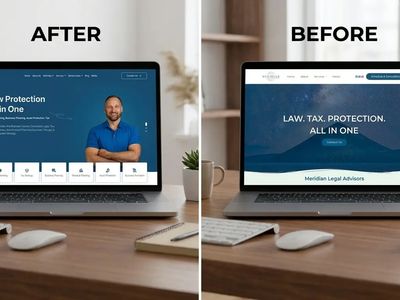
Meridian Legal Advisors
Bankruptcy Law

Meridian Legal Advisors

We gave their website a complete overhaul which improved credibility, clarified services, and streamlined the conversation of clients with a structured and user-friendly layout.

Alif Electrical Services – A Blueprint for High-Stakes Client Acquisition
Other

Alif Electrical Services – A Blueprint for High-Stakes Client Acquisition

Daira Agency – Technical Excellence in Marketing
Other

Daira Agency – Technical Excellence in Marketing

GNS Textile’s Transformation – A Blueprint for Modern Law Firms
Other

GNS Textile’s Transformation – A Blueprint for Modern Law Firms

Zahid Law – Family Law Firm Toronto
Family Law

Zahid Law – Family Law Firm Toronto

We transitioned the website from "bloated" to a high-performance engine, increasing search visibility, optimizing engagement, streamlining consultation, and enhancing conversation rate.

Centaurus Academy – Building a Scalable, High-Trust Digital Platform
Other

Centaurus Academy – Building a Scalable, High-Trust Digital Platform

Punjab Police Asset Tracking Software
Other

Punjab Police Asset Tracking Software

Gujranwala Traffic Police AM&TS
Other

Gujranwala Traffic Police AM&TS

One Touch Salon
Other

One Touch Salon

AI Google Ads ROAS Analyzer
Other

AI Google Ads ROAS Analyzer

AI Help Past Papers
Other

AI Help Past Papers

Educative Cloud – AI-Driven LMS Revolution
Other

Educative Cloud – AI-Driven LMS Revolution

Frequently asked questions about criminal defense SEO

Still have questions? Contact our team via ask@timetechnologiesllc.com

How long does SEO take for a criminal defense firm?

It depends on your charge types and market. Less competitive charge types like drug possession, theft, and white-collar crimes tend to be less saturated in organic search, so we typically see measurable ranking improvements within three to four months for these categories. DUI — the most competitive keyword cluster in criminal defense — usually requires four to six months to reach page one for primary keywords in competitive metro markets. We set honest timelines per charge type at the start of every engagement based on your specific competitive landscape — not industry averages.

Do you write the content or does our firm?

Both. Our content team drafts charge-specific content under your attorneys’ names. Your attorneys review each page for legal accuracy, jurisdictional precision, and bar advertising compliance before publication. The attorney’s name goes on the byline because Google requires named expertise for YMYL criminal defense content. Average attorney time commitment is one to two hours per charge-type page. We handle the production, research, and SEO optimization. Your attorneys provide the legal accuracy and sign-off.

What jurisdictions do you cover?

We build jurisdiction-specific content for any U.S. state, county, and court system. Our content team researches the specific criminal statutes, penalty ranges, court procedures, diversion program availability, and sentencing guidelines for each jurisdiction you serve. We do not use template content with city names swapped in — each jurisdiction’s page contains content written specifically for that jurisdiction’s legal framework.

Do you guarantee first-page rankings?

No. No legitimate SEO agency can guarantee specific ranking positions. Google’s algorithm is non-deterministic, competitor behavior is unpredictable, and search landscapes shift with algorithm updates. We guarantee process: defined deliverables per month, measured progress against ranking and traffic targets, weekly monitoring, and full transparency on what is working and what is not. If something is not working, we tell you and adjust. Agencies that guarantee rankings are either using tactics that violate Google’s guidelines or are making promises they cannot reliably keep.

How much does criminal defense SEO cost?

Criminal defense retainers typically fall in the mid-range of our law firm SEO pricing. The content is charge-specific and jurisdiction-specific, which requires more pages than a single-practice-area firm, but it is English-only in most markets, which reduces production complexity compared to immigration. We quote on a per-firm basis after the audit based on the number of charge types you handle, the number of jurisdictions you serve, and the current state of your website’s content and technical health. We do not publish fixed pricing because scope varies significantly between a boutique DUI defense practice and a full-service criminal defense firm handling twelve charge types across multiple counties.

Can you help with Google Business Profile and local SEO?

Yes. We optimize your Google Business Profile for your office locations, build citation consistency across 50+ legal directories, and structure local SEO signals for every county and court jurisdiction in your service area. For criminal defense firms, local SEO is especially important because prospects search with tight geographic modifiers — “DUI lawyer [county name],” “criminal defense attorney [city],” “drug charges lawyer near me” — and Google’s local pack results can drive significant click-to-call volume from mobile searches.

What do your monthly SEO reports include?

Ranking movement on all tracked keywords organized by charge type, organic traffic by page, consultation-form submission and click-to-call analytics including after-hours conversion rates, content published that month with performance benchmarks, backlinks acquired with source attribution, and a legislative watchlist flagging any changes to your state’s criminal code or sentencing guidelines that require content updates. We also include a forward-looking content schedule so your attorneys know what is coming up for review.

Time Technologies

FIND US ELSEWHERE

Subscribe to the newsletter

Stay connected with the latest updates from Time Technologies.

USA

1070 Montgomery Rd, Unit 594, Altamonte Springs, FL 32714

UAE

Building A1, Dubai Digital Park, Dubai Silicon Oasis, Dubai, United Arab Emirates

Pakistan

157-P, Gulberg 3, Lahore

© 2026 Time Technologies | All rights reserved.