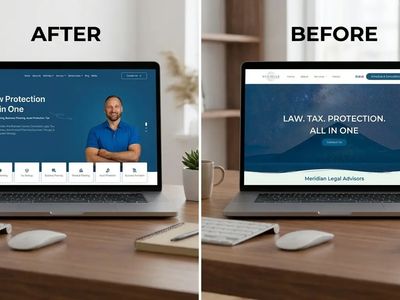
A Case Study For Bick Law LLP
We built a high speed law firm website demo with built-in lead qualification and Clio-integrated client portal, improving efficiency and reducing paralegal costs.


Ontario has more than 48,000 lawyers. More than half of them work in the Toronto region. The rest sit in seven other regions, each with its own competitors and its own search volume. We build marketing for the region a firm actually works in.
Ontario is one province and eight legal regions. The Law Society of Ontario counted 48,520 lawyers here in 2024. The Toronto region held 55.5 percent of them, the East 13.6 percent and the Northwest 0.8 percent.
That spread decides what a click costs, how many firms you bid against, and which practice areas are worth buying traffic for. A family firm in Scarborough and a family firm in Thunder Bay need different plans.
Search, paid ads, content, websites and intake all report to one number: what a signed case cost you. The first decision is which channels suit your region. The second is how much each one gets.

Every channel reports to one number: what a signed case cost you. We connect your ads, call tracking, forms and CRM, so each retainer traces back to the search or referral that produced it. That work sits in intake analytics and attribution for law firms.

Technical work, content and local signals for the practice areas and cities you compete in. Local search is part of it: the Google Business Profile, citations and city pages that put a firm into map results. See SEO for law firms.

Campaigns built around the searches that produce consultations. Calls and forms are tracked to the keyword that paid for them. Our PPC and Google Ads for law firms team builds and runs them.

Sites built to turn a visitor into a booked consultation, connected to your intake so enquiries reach the CRM. See law firm website design.

Pages and articles written from the questions clients ask at intake, and from the searches those questions turn into. Our content marketing for law firms service covers the writing and the plan.

Work on how the firm appears in AI Overviews and AI Mode. Google's AI features run on the same ranking systems as ordinary search, so this is part of the SEO work. It is handled inside AI SEO for law firms.
Chatbots and voice agents that answer when the office is closed, qualify the enquiry, and write it into your CRM. See AI chatbots for law firms.
The practice area sets the buyer, the urgency and the search. The region sets how much competition sits behind it.

Family files are decided close to home, so the work stays inside one region. We map the searches a family firm's own city produces, then build the pages and the intake that answer them.

Injury work carries the highest cost per click in the province, and the Toronto region takes most of it. A firm outside that region gets further by owning the searches near its own office.

A criminal enquiry arrives at night and moves within hours. Marketing for this practice is about being reachable at two in the morning, and being the first firm that answers.

Ontario's immigration clients search in several languages, and the Greater Toronto Area carries most of that demand. Pages and campaigns are built in each language the firm serves, with the enquiry logged for the team.

Estate work is planned ahead, so the client reads for weeks before calling. Content that explains what each document does earns the visit, and the enquiry usually arrives as a question.

Debt clients compare fees and want to know whether they qualify before speaking to anyone. A clear fee page and a short qualifying form do more for this practice than a wider campaign.

Download our Website & SEO Checklist


Perfect website, my partners loved the design. Your team has done a tremendous job!
”Because the competition differs, and so does the cost of reaching it. The Law Society's 2024 snapshot puts 55.5 percent of Ontario's lawyers in the Toronto region. In Toronto you bid against the densest concentration of firms in the country for the same searches. In a smaller market, fewer firms compete for the same terms and a click costs less. The same tactics apply, with a different budget and a different keyword list.
We can measure it. Ontario splits into eight Law Society regions: Toronto, the Northwest, the Northeast, the East, Central East, Central West, Central South and the Southwest. Their shares of the province's lawyers run from 0.8 percent to 55.5 percent. That tells us how hard ranking will be and what a click will cost before any money is spent.
No. We limit client partnerships by geographic market and do not run competing campaigns for two firms in the same local market. If we already work with a family law firm in Scarborough, we will not take a second one. We turn down work because of this. Advice given to two firms in one market is worth less to both of them.
For firms in Ottawa and eastern Ontario, yes. Part of the client base searches, compares and calls in French. That needs its own content and structure, including separate URLs and proper indexing. A translation widget does not cover it.
It depends on the region, the practice area and how much of the market you are trying to hold. We will not quote a number before looking. We report cost per signed case, which is the figure to compare between agencies, because a monthly retainer does not tell you the cost of a client.
Tracking is live in the first month, so calls and forms show their source early. Paid channels produce readable data within weeks. Search takes several months. A smaller market moves faster than Toronto, because fewer firms compete for the same terms.
Usually two or three rather than seven. A firm in a smaller market grows through local search and its Google Business Profile first, because the competition there is thin. A firm in a contested practice area adds paid search sooner. We start with the channel that fits the market and add the rest once the first one produces cases.
Cheaper clicks and fewer bidders. A firm in a smaller city can hold the searches that matter on a budget that would buy very little in Toronto. The tracking is the same: campaigns run on the terms closest to a consultation, and every call and form is tied to the keyword that paid for it.
The source is captured at the first contact and carried into your CRM. The tracking number on a call, the page and campaign on a form, the partner on a referral. At the end of the month the report shows enquiries by channel and clients by channel. The second column decides where the next dollar goes.
A small firm usually has nobody answering after five, and a caller who needs a lawyer that evening will try another firm before leaving a message. An answering service or an AI voice agent takes the details and books the consultation. The enquiry writes into the CRM like any other lead, so it appears in the monthly report alongside the calls that did get answered.
Yes. Section 4.2 of the Rules of Professional Conduct governs marketing, and it defines the word widely: advertisements, websites, firm names and trade names, letterhead, business cards and logos all count. Rule 4.2-1 requires the marketing to be demonstrably true, accurate and verifiable, and neither misleading, confusing nor deceptive.
Two more rules sit alongside it. Rule 4.2-1.1 requires the materials to identify the firm's lawyers as licensed lawyers. Rule 4.2-2 sets conditions on advertising a fee: the price has to say what service it covers, whether disbursements and tax are extra, and the firm has to charge that price.
Ontario differs from some US states here. There is no requirement to file advertising with the Law Society before it runs. Your firm stays responsible for compliance, so we keep claims factual, name the licence, and send anything borderline to you before it goes live. That describes the rules. It is not legal advice.
Rule 4.3-1 stops a firm describing itself as a specialist unless the Law Society has certified it.
Beyond that, the commentary to Rule 4.2-1 lists the claims that can breach it: money recovered or a success rate, unless the statement carries the warning that past results are not necessarily indicative of future results; claims of superiority over other lawyers; suggestions that a lawyer is aggressive; and testimonials or endorsements built on emotional appeals. Awards and rankings fall under the same rule, including words like best, top and number one, when they do not reflect a genuine evaluation or were conferred for payment.
Disparaging another firm is on the list as well, and so is marketing a service the firm cannot perform to a competent standard.
Nothing is spent before the tracking is finished.
We map the firms you compete with in your region, the searches they hold, and the searches that are open.
Calls, forms and referrals are tagged and connected to your CRM, so the first month of spend produces evidence.
Practice-area and city pages that answer the searches your region produces, then the channels that feed them.
Spend moves toward what retained clients. Channels that cannot show a retainer lose their share.
Toronto is where we start. Ontario has eight legal regions, and we add cities as firms come on board.
The stack we work in. Chosen per firm, and owned by the firm where it can be.


We will look at where your leads come from now, what the competition in your region looks like, and which channels are worth funding. Free, 30 minutes, no commitment.
Still unsure? Ask us directly and we will answer without a pitch.
No. Search results and lead volume depend on your market, your competition and your intake. An agency controls some of that and not the rest. What we commit to is the process: tracking that works, pages built for real searches, and monthly evidence of what each channel produced.
Yes. A solo or a two to four lawyer firm is a common starting point. Small firms usually do better by owning a few valuable searches in one city. Larger firms can cover more ground. Which one you are changes the plan.
Yes. A firm in London, Ottawa or Kingston competes in a different field from a Toronto firm, and the marketing follows that.
Yes. Sometimes the existing work is fine and the tracking is the problem. We will say so if that is what we find.
We look at your site, your search visibility and where your leads come from before the call, so the thirty minutes are spent on your numbers. You leave with a view of what is missing and what it would take. There is no obligation.
You do. The domain, the analytics, the ad accounts and the CRM stay in your name. We work inside your systems.
Growth marketing for law firms
Legal intake solutions
Operations excellence for law firms
Practice areas we serve
Locations We Serve
1070 Montgomery Rd, Unit 594, Altamonte Springs, FL 32714
Building A1, Dubai Digital Park, Dubai Silicon Oasis, Dubai, United Arab Emirates
157-P, Gulberg 3, Lahore