Back to Solutions
SEO for Personal Injury Lawyers

Rank for the keywords that cost $150 per click on Google Ads.

Your competitors pay $200–$400 per click for keywords like “car accident lawyer near me,” often spending $30,000 to $100,000+ monthly on paid search. Organic rankings offer a free alternative: reaching page one for a high-intent personal injury keyword saves your firm five and six figures in ad spend every month. Personal injury is the most competitive and economically valuable SEO vertical in legal. To displace entrenched firms, we build case-type-specific SEO infrastructure for personal injury firms—including car accidents, trucking accidents, medical malpractice, wrongful death, premises liability, and mass tort—designed to convert the highest-value organic traffic.

Personal injury SEO is not the same as regular SEO

Personal injury SEO is a high-stakes vertical where Google applies rigorous E-E-A-T standards to legal content, making generic playbooks ineffective. Because primary keywords like “car accident lawyer near me” can cost $200–$400 per click, organic rankings provide massive economic value by offsetting five-figure monthly ad spends. However, displacing entrenched competitors who have dominated for years requires more than a blog; it demands a systematic competitive displacement strategy. By architecting case-type infrastructure and separating mass tort keywords into dedicated paths, firms can capture high-intent traffic and secure a compounding return on investment that outweighs standard PPC campaigns.

Results
Avg. Organic Traffic Increase320%
Avg. Time to Page 1 Ranking4.2 Months
Client Retention Rate94%
PI SEO Specialists

WHY OUR PERSONAL INJURY SEO OUTPERFORMS

Personal injury SEO requires more than generic content; it demands a specialized architecture that accounts for intense competition and rigorous E-E-A-T standards. Every element—from site structure and mass tort separation to schema implementation—is engineered to handle the unique constraints of bar advertising rules and the rapid 24-to-48-hour PI conversion window. We don't just optimize for search; we build a systematic infrastructure designed to displace entrenched competitors and capture high-intent traffic across every case type your firm handles.

Case-type-specific page architecture that competes at the top

Personal injury clients search using specific case-type keywords—such as “car accident lawyer near me” or “medical malpractice lawyer”—not generic “personal injury attorney.” A single page cannot compete across these separate keyword universes. We build your site architecture around every case type, including car accidents, medical malpractice, and wrongful death, giving each a dedicated, optimized landing page. This architecture captures searchers at the moment of need, targets distinct keyword clusters with city-level localized content, prevents cannibalization, and optimizes conversion for the critical 24-to-48-hour PI decision window.

Mass tort content tracks completely separated from single-event PI

For firms running mass tort campaigns alongside a core personal injury practice, structural separation is mandatory. Mass tort keywords and single-event PI queries target distinct audiences, produce unique conversion paths, and occupy different competitive landscapes. A Camp Lejeune prospect researches exposure criteria and claim deadlines, while a car accident victim seeks immediate representation. These are separate legal categories with unique keyword sets, geographic relevance, and intake requirements. Co-mingling these tracks dilutes rankings, as Google cannot determine a page’s primary topic. We architect mass tort campaigns on independent URL paths—such as /mass-tort/camp-lejeune or /mass-tort/roundup-lymphoma—complete with dedicated keyword structures, specialized schema, and qualification questionnaires. This ensures your car accident SEO remains focused while your mass tort pages rank for high-intent national traffic without cross-track interference.

Competitor displacement strategy built for the toughest vertical in legal

Personal injury SEO is a zero-sum game; displacing entrenched PI competitors requires a systematic competitive displacement strategy. We analyze three simultaneous gaps—Content gap (case-type depth), Authority gap (backlinks), and Technical gap (schema/speed)—to overcome firms that have dominated for years. We monitor competitor movement weekly, ensuring our multi-dimensional strategy shifts rankings where standard approaches fail.

E-E-A-T content Google treats as authoritative

We ensure all personal injury content is authored and credentialed to satisfy maximum E-E-A-T signals for high-stakes YMYL legal content. Every case-type page uses the named attorney's byline, structured Author schema, and jurisdiction-specific citations to tort statutes and statute of limitations rules. These authority signals are the non-negotiable foundation required to secure rankings worth over $10,000 per month in avoided ad spend.

Get Started

SEO strategies built for your personal injury practice

Every personal injury case type has its own keyword universe, its own competitive density, its own liability framework, and its own client behavior pattern. A spouse searching for a car accident lawyer after a freeway collision behaves completely differently from a family researching medical malpractice attorneys after a surgical error, or a construction worker looking for help after a fall from scaffolding. We build case-type-specific SEO strategies that match search intent to your services — capturing clients at the exact moment they need representation.

Car accident SEO

Car accidents represent the single highest-volume keyword cluster in personal injury. Queries like “car accident lawyer near me,” “auto accident attorney [city],” and “car wreck attorney” have high conversion intent but a tight 24-to-48 hour decision window. To capture this traffic, we build highly competitive, city-specific car accident pages that immediately address critical client needs: liability (fault/no-fault), statute of limitations, and contributory negligence or comparative negligence. Each page features state-specific tort statutes, a minimal-field consultation request form, and a click-to-call button to optimize for fast retention, complemented by FAQPage schema.

Medical malpractice SEO

Medical malpractice SEO targets high-value cases where a single six- or seven-figure fee makes every organic ranking extraordinarily valuable. Because medical malpractice prospects research extensively, we build condition-specific content clusters—addressing surgical errors, misdiagnosis, birth injuries, and nursing home abuse—that demonstrate genuine medical-legal expertise. Every page is attorney-authored to satisfy Google’s rigorous E-E-A-T standards for YMYL content, explaining the standard of care and causation in precise yet accessible language.

Wrongful death SEO

Wrongful death cases require profound emotional sensitivity and legal authority. A grieving family seeks immediate, trustworthy representation, making empathetic yet professional content essential for conversion. Because wrongful death statutes—including standing, recoverable damages, and statutes of limitations—vary significantly by state, your SEO infrastructure must demonstrate command of local tort law to build necessary trust. We architect wrongful death pages that prioritize clarity over aggressive marketing. By addressing critical concerns—such as standing to file, recoverable economic and non-economic losses, and funeral expenses—we establish your firm as an authoritative resource. Every page features attorney authorship with trial credentials, ensuring the content satisfies E-E-A-T signals while treating prospects with respect. This balance of legal precision and empathy drives conversion without the need for high-pressure tactics or stock imagery.

Trucking accident SEO

Trucking accident cases involve layers of regulatory complexity—including FMCSA hours-of-service, ELD data, and maintenance standards—that separate them from standard auto litigation. The keyword universe is distinct; prospects searching for a “truck accident lawyer” or “18-wheeler accident attorney” require specific litigation expertise. We build trucking-specific infrastructure that demonstrates command of federal mandates and multi-party liability, capturing high-value traffic along major interstate corridors.

Slip and fall and premises liability SEO

Premises liability covers property negligence—from slip and fall hazards and inadequate security to dog bites and toxic exposure. Each sub-category represents a distinct keyword niche with unique liability frameworks and search behaviors. Generic playbooks often bury these claims on a single, overcrowded page that ranks for nothing. We architect premises-type-specific pages that target dedicated keyword clusters. By addressing state-specific duty of care standards, constructive notice, and comparative negligence for each category, your site captures the full breadth of premises liability search volume while establishing authoritative relevance for every claim type.

Mass tort SEO

Mass tort campaigns target a national, distinct prospect profile—focused on product or environmental exposure qualification rather than local accidents—requiring a multi-step qualification form, not a consultation request. We build these campaigns on dedicated URL paths structurally independent from single-event PI, using specialized keyword architecture for specific cases like Camp Lejeune water contamination, Roundup and non-Hodgkin lymphoma, and AFFF firefighting foam. Since mass tort keywords are national and campaign-driven, their SEO strategy relies on authority content and link acquisition from health and safety publications, not local citations.

SEO process built for personal injury firms

A proven approach that delivers results

1

SEO audit & competitor displacement analysis

Our process begins with a non-standard SEO audit and competitor displacement analysis. We evaluate your current technical health, case-type coverage, content depth, and conversion infrastructure. Crucially, we map the backlink profiles and content architectures of your top five page-one competitors to build a displacement roadmap. This intensive competitive intelligence approach identifies the specific gaps and estimates realistic timelines per keyword cluster based on competitive difficulty, delivering a prioritized remediation and content roadmap.

2

Case-type architecture & keyword mapping

We architect your keyword map across case types and target markets before drafting content. Each page targets a primary keyword and intent classification with a dedicated internal linking plan. Mass tort campaigns are structurally separated onto independent URL paths to ensure specialized authority. Our hierarchy—from a central personal injury hub to localized case-type landing pages—is engineered to capture distinct keyword clusters, feeding authority upward and ensuring your firm dominates every injury category and geographic market you target.

3

On-page optimization & conversion build

We implement technical on-page optimizations—titles, meta descriptions, and Core Web Vitals—alongside high-conversion elements tailored for the PI decision window. Each page is anchored with LegalService schema, attorney-level author markup, and FAQPage data. We embed click-to-call buttons and streamlined consultation forms from day one, ensuring your site is engineered to convert high-value personal injury traffic immediately.

4

Authority building & ongoing competitive monitoring

We execute a continuous authority building strategy: publishing monthly E-E-A-T-compliant content and securing authoritative backlinks from trial lawyer associations, medical expert directories, and legal publications. PI SEO demands intensive, ongoing competitive monitoring; we track competitor content changes and backlink acquisition weekly, adjusting content and linking strategy immediately upon detecting a ranking threat. A monthly performance report details performance, covering rankings per case type, organic traffic, and estimated ad-spend offset.

Ready to stop losing cases to competitors?

Tell us your case types, your target markets, and your current paid search spend — we’ll show you exactly what a first-page ranking strategy looks like for your firm and how much ad spend each organic position can offset. Whether you handle car accidents in Miami, medical malpractice in Dallas, trucking cases in Houston, wrongful death in Atlanta, or mass tort campaigns nationally, we’ll build a custom SEO roadmap for your competitive landscape. No generic audits. No recycled playbooks. A custom keyword analysis, competitive displacement strategy, and case-type architecture plan built for your practice, your markets, and your competitors.

What makes SEO for personal injury lawyers different from general SEO

Search engine optimization for personal injury firms operates in the most economically valuable, most competitively intense, and most strategically complex organic search landscape in all of legal. The cost structure of paid search makes organic rankings extraordinarily valuable. The competitive environment means displacement requires strategic depth that general SEO cannot provide. And the structural separation required between mass tort and single-event PI adds an architectural complexity that most agencies have never encountered. Below we explain each of these dimensions.

Book a Consultation

Why are personal injury keywords the most expensive in all of legal search, and what does that mean for organic SEO?

Personal injury keywords carry the highest cost-per-click rates in paid search because the economic value of a single retained case is higher than in any other legal practice area. A retained car accident case can generate $50,000 to $500,000 or more in contingency fees for the firm. A medical malpractice case can reach seven figures. At those case values, paying $200 to $400 per click for “car accident lawyer near me” is economically rational — even at a one to two percent click-to-retention rate, the expected revenue per click exceeds the cost by a wide margin.

This economic dynamic has two consequences that reshape the entire organic SEO strategy. First, every organic ranking position has an outsized economic value. A single page-one organic ranking for “car accident lawyer [city]” in a competitive metro market can offset $5,000 to $15,000 per month in ad spend. Over a year, that is $60,000 to $180,000 in savings from a single keyword. A portfolio of five to ten page-one rankings across case types and markets can offset $250,000 to $1,000,000 or more in annual paid search spend. No other practice area offers this return profile from organic SEO investment.

Second, the economic value of PI keywords attracts the most aggressive SEO investment from competitors. The firms currently holding page one positions for PI keywords have been investing in SEO for five to ten years. They have deep content libraries, extensive backlink profiles from years of authority acquisition, and technically optimized websites with schema depth that general law firm sites cannot match. Displacing these firms requires an investment level and strategic sophistication proportional to the economic value being protected. This is not a practice area where a six-month blog calendar and a handful of directory links will move the needle. PI SEO is a multi-year competitive campaign, and the firms that commit to it early build compounding advantages that become progressively more expensive for late entrants to overcome.

Why must mass tort and single-event PI be completely separated in your site architecture?

Mass tort and single-event personal injury target fundamentally different keyword sets, serve fundamentally different prospect profiles, operate in fundamentally different competitive landscapes, and require fundamentally different conversion mechanisms. Combining them on the same URL paths or within the same content architecture damages both.

The keyword separation is total. A prospect searching for “Camp Lejeune lawsuit” or “Camp Lejeune settlement amounts” has zero overlap with a prospect searching for “car accident lawyer near me” or “slip and fall attorney.” Mass tort keywords are national — geographic modifiers are irrelevant because the litigation is consolidated in multidistrict litigation regardless of where the claimant lives. Single-event PI keywords are hyper-local — the prospect needs an attorney licensed in their state who practices in their city. The search volume patterns are different as well: mass tort keywords spike with media coverage, television advertising, and litigation milestones, while single-event PI keywords generate steady daily volume tied to the base rate of accidents in a market.

The conversion mechanism is different. Mass tort prospects need to be qualified against specific exposure criteria before they become viable leads — they must have served at Camp Lejeune during the specified date range, or used a specific product for a specified duration, or received a specific diagnosis within a specified timeframe. The conversion path is a multi-step qualification questionnaire, not a consultation request. Single-event PI prospects need to speak with an attorney about their specific accident. The conversion path is a consultation form or phone call.

When these two categories share URL paths, content resources, or internal linking authority, both are weakened. Google cannot determine whether the /personal-injury/ section of your site is about local accident cases or national mass tort campaigns. The page authority that should be concentrated on your car accident content is diluted by mass tort content that targets a completely different search audience. We separate them architecturally from day one: dedicated /mass-tort/ URL paths that are structurally independent from your /personal-injury/ case-type pages, with separate internal linking profiles, separate schema, and separate conversion paths. The two content tracks only connect at the top-level navigation, and they never compete for the same ranking signals.

How does the PI competitive landscape differ from every other legal practice area?

Personal injury is a zero-sum game at the top of page one in a way that other practice areas are not. In bankruptcy, the firms currently ranking often have thin content and weak backlink profiles, which means new entrants can reach page one within three to four months. In criminal defense, fewer firms have invested in organic SEO, which creates displacement opportunities within 60 to 90 days for less competitive charge types. In immigration, the competitive landscape varies dramatically by visa category and language. But in personal injury, the top ten organic results for primary keywords in major metro markets are occupied by firms and directories that have been building domain authority, content libraries, and backlink portfolios for five to ten years.

Displacing these firms requires a competitive analysis approach that goes beyond standard SEO practices. We analyze three specific gap dimensions. Content gap: what case-type pages, FAQ coverage, informational depth, and localized content are the current rankers providing that your site does not? If the firm ranking number one for “car accident lawyer Dallas” has a 3,000-word car accident page with city-specific content, FAQ schema, attorney bylines, and embedded video testimonials, your 500-word generic page will not outrank them regardless of how many backlinks you acquire. Authority gap: where are their backlinks coming from? Trial lawyer association directories, legal publications, law school scholarship citations, local news media, and medical expert network referrals are the authority sources that move PI rankings. Generic directory submissions do not compete. Technical gap: where are their sites faster, better-structured, or more schema-rich? Core Web Vitals scores, mobile rendering quality, schema depth for LegalService, FAQPage, and LocalBusiness, and crawl efficiency all affect ranking positions in competitive verticals.

The timeline reflects this competitive intensity. In most major metro markets, reaching page one for primary PI keywords takes six to twelve months. Less competitive markets and secondary case types can move faster. Mass tort keywords sometimes move faster because fewer firms invest in organic mass tort SEO. We set case-type-specific and market-specific timelines based on competitive analysis of the actual firms holding page one, not on industry averages or agency marketing claims.

What bar advertising restrictions affect personal injury SEO content?

Bar advertising rules vary by state and impose specific restrictions on what personal injury firms can publish on their websites. In most jurisdictions, law firm websites are classified as advertising, which means everything on your PI pages is subject to your state’s advertising rules. The restrictions that most frequently affect PI SEO content fall into four categories.

First, verdict and settlement claims. Most states prohibit or restrict references to specific dollar amounts recovered in past cases unless accompanied by appropriate disclaimers. Texas, Florida, New York, and California each have their own rules about how past results can be referenced, what disclaimers are required, and whether specific case outcomes can be listed on a website at all. Some states require that verdict and settlement information be filed with the bar before publication. We do not include specific dollar amounts in page content, title tags, or meta descriptions unless your state permits it and the required disclaimers are properly structured.

Second, superlative claims. “Best personal injury lawyer,” “#1 car accident firm,” “top-rated PI attorney” — these claims are restricted in most states unless substantiated by specific independent rating bodies and accompanied by disclosures that the designation is an advertising classification. Even claims like “leading” or “premier” can trigger advertising-rule scrutiny. We build title tags and meta descriptions around service descriptions and credentials rather than superlatives.

Third, testimonials and endorsements. Client testimonials on PI pages are restricted in many states and require specific disclosures. Some states prohibit testimonials that imply a specific result. Video testimonials face additional scrutiny. We structure testimonial sections to comply with your state’s specific rules and recommend Google Business Profile reviews as the primary social proof mechanism.

Fourth, advertising material disclosures. States including Texas, Florida, and New York require specific disclosure language on attorney advertising materials, including websites. We include the required disclosures in page footers per your state’s specifications. All personal injury content we produce is reviewed against your state’s bar advertising rules before publication, and we maintain a state-specific compliance checklist that governs every page we produce.

Why does the PI conversion window work differently than other practice areas?

Personal injury has a conversion window that is faster than family law, bankruptcy, or immigration, but slightly longer and structurally different from criminal defense. Understanding this difference is critical for building conversion infrastructure that actually captures PI leads rather than letting them leak to competitors.

Criminal defense prospects decide within hours — they call the first attorney who answers the phone at 2 AM. The conversion mechanism is immediate contact. PI prospects operate on a 24-to-48-hour timeline and typically contact two to three firms before retaining. They are not in the same acute crisis as a criminal defense prospect, but they are in pain, worried about medical bills, uncertain whether they have a viable claim, and making a high-stakes decision under stress. Their search behavior includes comparison: they visit two to three firm websites, evaluate credentials and case-type expertise, read testimonials or reviews, and then contact the firms that seem most qualified.

This comparison behavior means your page must accomplish two things simultaneously: establish authority quickly enough that the prospect includes your firm in their consideration set, and differentiate your firm from the two or three competitors they are also evaluating. The content that accomplishes this is not generic “we fight for you” language. It is case-type-specific expertise demonstrated through detailed process descriptions, liability analysis, and damages category information that shows the prospect your firm understands their specific situation. The conversion element must match the comparison timeline: a consultation request form with minimal fields and a clear value proposition for the consultation itself. The prospect needs to believe that the 30-minute consultation will give them real information about their case, not just a sales pitch. We structure consultation CTAs to emphasize what the prospect will learn, not just what the firm wants them to do.

Featured case studies

Tailored strategies that address the unique challenges of your practice area

Athemiq Education — Tutoring Marketplace That Scaled to 18,500 Users
Other

Athemiq Education — Tutoring Marketplace That Scaled to 18,500 Users

How we built Canada's most comprehensive online tutoring marketplace, connecting students with qualified tutors through an intelligent matching system and fair bidding platform — growing from 1,200 to 18,500 monthly active users in under 12 months.

15x
Bick Law LLP
Bankruptcy Law

Bick Law LLP

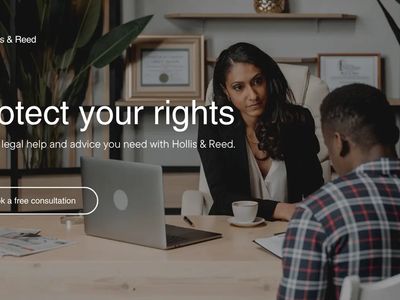
We built a high speed law firm website demo with built-in lead qualification and Clio-integrated client portal, improving efficiency and reducing paralegal costs.
 Mirha Exams – A Scalable Framework for Modern Law Firms
Other

Mirha Exams – A Scalable Framework for Modern Law Firms

Mirha Exams has completely transformed how our students prepare for their exams. The platform's intuitive design and comprehensive content have led to remarkable improvements in student performance.

400%
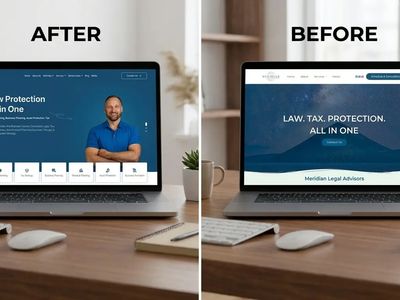
Meridian Legal Advisors
Bankruptcy Law

Meridian Legal Advisors

We gave their website a complete overhaul which improved credibility, clarified services, and streamlined the conversation of clients with a structured and user-friendly layout.
Alif Electrical Services – A Blueprint for High-Stakes Client Acquisition
Other

Alif Electrical Services – A Blueprint for High-Stakes Client Acquisition

Daira Agency – Technical Excellence in Marketing
Other

Daira Agency – Technical Excellence in Marketing

GNS Textile’s Transformation – A Blueprint for Modern Law Firms
Other

GNS Textile’s Transformation – A Blueprint for Modern Law Firms

Zahid Law – Family Law Firm Toronto
Family Law

Zahid Law – Family Law Firm Toronto

We transitioned the website from "bloated" to a high-performance engine, increasing search visibility, optimizing engagement, streamlining consultation, and enhancing conversation rate.

Centaurus Academy – Building a Scalable, High-Trust Digital Platform
Other

Centaurus Academy – Building a Scalable, High-Trust Digital Platform

Punjab Police Asset Tracking Software
Other

Punjab Police Asset Tracking Software

Gujranwala Traffic Police AM&TS
Other

Gujranwala Traffic Police AM&TS

One Touch Salon
Other

One Touch Salon

AI Google Ads ROAS Analyzer
Other

AI Google Ads ROAS Analyzer

AI Help Past Papers
Other

AI Help Past Papers

Educative Cloud – AI-Driven LMS Revolution
Other

Educative Cloud – AI-Driven LMS Revolution

Frequently asked questions about personal injury SEO

Still have questions? Contact our team via ask@timetechnologiesllc.com

How long does SEO take for a personal injury firm?

It depends on your market and case types. In most major metro markets, reaching page one for primary PI keywords like “car accident lawyer [city]” takes six to twelve months due to the intense competitive environment. Less competitive markets and secondary case types can move faster. Mass tort keywords sometimes move faster because fewer firms invest in organic mass tort content. We set case-type-specific and market-specific timelines based on competitive analysis of the firms currently holding page one — not on industry averages.

Should I do SEO and PPC together for personal injury?

Yes. Organic and paid search serve complementary functions in personal injury. PPC provides immediate lead flow from day one while organic rankings build over months. Once organic rankings are established, they provide a compounding return — every click is free, every month the ranking holds is another month of avoided ad spend. The long-term ROI of organic SEO exceeds PPC because organic traffic has no marginal cost, but PPC fills the pipeline during the six-to-twelve-month build period. We coordinate keyword strategies with your PPC agency or our own paid search team to ensure organic and paid campaigns target complementary keyword sets and do not cannibalize each other.

Do you handle mass tort SEO?

Yes, as a structurally separate content track from single-event PI. Mass tort campaigns get dedicated URL paths, dedicated keyword architectures, dedicated conversion mechanisms with qualification questionnaires, and separate internal linking structures. Your mass tort content never dilutes your core PI practice rankings, and your PI content never interferes with your mass tort campaign performance.

Do you write the content or does our firm?

Both. Our content team drafts case-type-specific content under your attorneys’ names. Your attorneys review each page for legal accuracy, jurisdictional precision, and bar advertising compliance before publication. Average attorney time commitment is one to two hours per case-type page. We handle the research, production, SEO optimization, and schema implementation. Your attorneys provide the legal accuracy, trial credentials, and sign-off.

Do you guarantee first-page rankings?

No. Personal injury is the most competitive SEO vertical in legal, and no legitimate agency can guarantee specific ranking positions in any vertical, let alone the most competitive one. We guarantee process: defined deliverables per month, weekly competitive monitoring, measured progress against case-type-specific ranking targets, and full transparency on what is working, what is not, and why. If a strategy is not producing expected results, we diagnose the problem and adjust — we do not wait for a quarterly review to tell you something is not working.

How much does personal injury SEO cost?

Personal injury retainers are at the higher end of our law firm SEO pricing because the competitive environment demands deeper content, more aggressive authority building, ongoing competitive intelligence, and weekly monitoring. The investment is proportional to the return — a single page-one ranking for a primary PI keyword can offset $5,000 to $15,000 per month in ad spend, which means the SEO retainer often pays for itself within the first three to six months of ranking. We quote on a per-firm basis after the competitive analysis based on your target markets, case types, current site baseline, and the strength of the firms currently holding page one.

What about bar advertising compliance?

All personal injury content we produce is reviewed against your state’s bar advertising rules before publication. We do not include verdict amounts, settlement figures, superlative claims, or unsubstantiated testimonials. Content focuses on case-type information, legal process descriptions, liability analysis, and attorney credentials. Required advertising disclosures are included in page footers per your state’s specifications. We maintain a state-specific compliance checklist that governs every page.

What do your monthly SEO reports include?

Rankings per case-type keyword cluster with weekly movement tracking, organic traffic by page and by market, consultation-form and click-to-call analytics, estimated ad-spend offset for each ranking position held, content published that month with performance benchmarks, backlinks acquired with source attribution and domain authority ratings, competitor movement alerts flagging any ranking changes by competing firms, and a forward-looking content schedule with attorney review assignments.

Time Technologies

FIND US ELSEWHERE

Subscribe to the newsletter

Stay connected with the latest updates from Time Technologies.

USA

1070 Montgomery Rd, Unit 594, Altamonte Springs, FL 32714

UAE

Building A1, Dubai Digital Park, Dubai Silicon Oasis, Dubai, United Arab Emirates

Pakistan

157-P, Gulberg 3, Lahore

© 2026 Time Technologies | All rights reserved.