.svg&w=32&q=75&dpl=dpl_dAmta2RFvBo4McW13rS5CascQtnM)

.svg&w=32&q=75&dpl=dpl_dAmta2RFvBo4McW13rS5CascQtnM)
Featured Guest
Jeremy Neilson
Episode Notes & Transcript
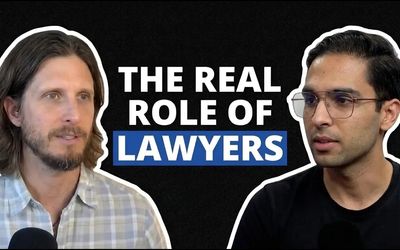
Most people think of law as a service you buy by the hour. My guest today, Jeremy Neilson, thinks of it as an engine you build for scale.
Jeremy is the co-founder of Sally and former CEO of Assure, where he pioneered the infrastructure that allows venture capitalists and angel investors to launch Special Purpose Vehicles (SPVs) at a fraction of traditional cost and time. Across his career, he has structured 9,000+ SPVs, onboarded 250,000+ investors, and helped raise over $14 billion.
In this conversation, we go deep on the mechanics of SPVs, why most law firms are behind on productization, how AI and automation are reshaping billable-hour economics, and what new attorneys should do in a Big Law hiring freeze. If you run a business law, securities, or investment-focused firm, or you are a legal tech founder trying to understand how attorneys think, this episode is a masterclass.
Timestamps:
00:00 – Why law is an engine, not an hourly service
00:41 – SPV 101: What a Special Purpose Vehicle actually is and why it matters
02:32 – Why an SPV filing is identical to a nail salon LLC and where the paths diverge
03:59 – The exact law firm profile that should be offering SPV services
05:06 – The 19 tasks behind every SPV and why forming the LLC is the easy part
07:27 – Are law firms that refuse to productize facing an AI-driven extinction event
11:03 – The one workflow break Jeremy sees firms ignore until it is too late to scale
15:01 – How Sally makes SPV adoption safe for attorneys who are hesitant
17:17 – Why white-labeled automation can increase client trust
20:20 – Balancing bank-grade security with a seamless investor experience
23:43 – If you ran a mid-size law firm today, would you hire a fund admin team or an automation engineer
25:20 – Do law degrees and college degrees still matter in the age of AI
30:06 – How new lawyers should navigate a shrinking Big Law pipeline
34:05 – From rejection letters to launching three law firms
40:36 – The biggest mistake law firm founders make with sales, marketing, and overhead
43:03 – The 70 percent rule and why waiting for certainty is too late
46:17 – Should legal tech founders hire an attorney co-founder
49:47 – Personal brand versus company brand
52:05 – Where to learn more and Jeremy’s open invitation
Full Transcript:
Awais: Most people think of law as a service you buy by the hour. My guest today, Jeremy Neilson, thinks of it as an engine you build for scale. Jeremy is a co-founder of Sally and a former CEO of Assure, where he pioneered the infrastructure that allows venture capitalists and angel investors to launch SPVs at a fraction of traditional cost and time. Welcome to the show, Jeremy. It's a pleasure having you here.
Jeremy Neilson: Thank you. Glad to be here.
Awais: Jeremy, for a lot of people like me, SPV is a very new term. Could you please explain what exactly SPV means and what it does?
Jeremy Neilson: Sure. SPV is an acronym for special purpose vehicle. To unpack that, when you're investing in private assets, there are public assets on the stock market and then everything else is considered private assets. There are two ways to approach an investment in a private asset. One is called going direct, which typically means you pull money out of your pocket, talk to the sponsor or the CEO, put money into the opportunity or company, and you're listed on the cap table. The other way is aggregating money together—you and friends, family, networks, community, or your investors. If you aggregate them into a pool, then you need a vehicle. You put them into a special purpose vehicle to aggregate the money in order to invest. This vehicle is typically an LLC or an LP, and usually in Delaware. So you set up a Delaware LLC—that's your vehicle. Why are you using this LLC? It's for a special purpose. That single or specific purpose is to invest in the startup or opportunity that you have found in private assets. So that's what it really is: setting up a Delaware LLC and pooling money for a specific purpose to make an investment.
Awais: So let's suppose I file an incorporation in Delaware. How is it different? Is there a special way we apply for an SPV, or can we just do it on our own?
Jeremy Neilson: You can do it on your own and there isn't really anything special. There's no special code or SPV designation. It's a traditional Delaware LLC or LP, and those get set up every single day. I like to use the example of a community business like a nail salon, a gas station, or a restaurant. Every day, people apply for an LLC using the exact same paperwork. An SPV and a nail salon fill out the exact same paperwork. The difference goes back to that special purpose. An SPV does this one specific thing—it's quiet, dormant, and acts as a holding company—whereas a nail salon has rent, salaries, healthcare, and operational expenses. There is no difference in the initial filing approach between the two. After you fill out the paperwork and get it set up, the paths divert based on what you are using it for and how you move forward. You just do the same filing you would for any other LLC use case.
Awais: If we talk about law firms, which category of law firms would require this kind of service?
Jeremy Neilson: The law firms that use or set up SPVs focus on business law, investment, and securities—or specific funds like traditional venture funds, structured vehicles, or syndications. Typically, as you cover securities, investments, businesses, investors, and CEOs, you start having conversations where clients say, "I need a special purpose vehicle" or "I need a fund." That's usually the path a lawyer or law firm takes into practicing around SPVs or funds.
Awais: If I can do it on my own, why do I need you, Sally, or a specialized provider?
Jeremy Neilson: Great question. Setting up the entity is maybe the easiest part. A special purpose vehicle involves a lot. Going back to the example of a hair salon, gas station, or restaurant: once you launch that business, you need HR assistance, payroll, QuickBooks, tax help, construction, booking, and scheduling software. SPVs are no different. You set up your entity, and now you need a bank account, legal documents signed by all investors, an onboarding flow, tax filings, securities filings, distributions, membership transfers, and corporate actions. I break it down into 19 different tasks involved in the life of an SPV. Setting up the LLC is task one, and there are 18 more to do. Sally is software that automates those other 18 steps—and can automate that first step as well. It has all the features and functions to make life much easier. When law firms want to help their clients set up SPVs, they can use our software and bill for their time while using it. It makes their lives easier, streamlines the workflow, and creates a better experience for everybody.
Awais: When I started working with law firms, I thought they were the hardest nut to crack because they're very difficult to advise. You've proven that what used to take law firms three weeks and probably $20,000 in billable hours can now be done via Sally in minutes for a fraction of the price. As someone who helps law firms automate workflows, I see a lot of resistance to this shift. Do you think law firms that refuse to productize repeatable workflows like SPV creation or intake face an existential threat, especially now that AI is here?
Jeremy Neilson: That's a great question. I believe law firms continue to add tons of value. I see that every day talking to lawyers and law firms. They have specialized knowledge, and clients find comfort in working with an experienced attorney. That part isn't going away. However, as people learn there are smoother ways to accomplish things using software and AI, they become extremely interested. When dealing with SPVs or funds, the investor experience is critical because you don't have an SPV without investors. For a law firm's client raising money, their client is the investor. If you provide a great experience for that investor, the client appreciates it. The administrative burden grows as they scale. Having software and workflows that simplify life allows them to execute more deals, meaning they return to that attorney more often. Rather than focusing solely on short-term billable hours, attorneys can realize that providing modern software locks clients in for long-term advisory relationships.
Awais: When you built Assure and now Sally, you weren't just building software—you were building legal infrastructure. In my work, I find that most law firms have software like Clio or another CRM, but lack connected backend infrastructure for things like intake or K-1s. From your experience scaling thousands of SPVs, what is one data break that most firms ignore until it's too late to scale?
Jeremy Neilson: There are many. As a California-licensed attorney, when we built the process for Assure 15 years ago, we took a traditional venture fund and stripped it down to its bare bones—identifying the exact regulatory steps, documents, and workflows required. We did everything manually for years before building technology, which was extremely valuable because doing it manually taught us what needed to be built. Lawyers are trained to do things manually, so there can be mistrust or misunderstanding about software: "Will it do everything I need? Can I customize it?" When software offers flexibility, attorneys embrace it. When working with attorneys who know the SPV space well, they love the software because it covers 80% to 90% of the required workflows. The biggest issue or break for newer attorneys is simply lack of experience in understanding securities, workflows, investor pressures, and deal dynamics.
Awais: Many law firms are still far behind—some don't even have websites. How are you making it easy for lawyers who don't fully understand Sally to incorporate it into their workflows and reap the benefits?
Jeremy Neilson: Over the years, I've focused heavily on education. I run a YouTube channel called "All Things SPVs" where I break down every aspect of SPVs step-by-step. I give away free documents and offer attorneys a white-labeled tenant of Sally so they can test it, generate documents, and experience the workflows firsthand. I offer videos and training to give attorneys enough touchpoints to feel comfortable. SPVs have a learning curve, but after a few iterations, it becomes straightforward. My approach is providing free access and education to make them feel confident.
Awais: Sally offers a white-labeled SPV engine for law firms, allowing them to operate like a tech company. For attorneys listening who fear losing the human touch to automation, how do you argue that a white-labeled automated platform actually increases a client's trust in a lawyer?
Jeremy Neilson: Using quality software actually builds more trust. Investors give far more respect and trust to deal organizers who provide a smooth, professional software experience rather than painful, manual DocuSign processes and confusing accreditation forms. Clients expect their attorneys to know the best tools available. If an attorney says, "We use this great platform to handle this seamlessly," clients are relieved and appreciative. Sally automates heavily, but it also allows lawyers to step in and self-govern at any point. As a lawyer, I built Sally thinking like an attorney, so the platform accommodates human oversight whenever needed.
Awais: When dealing with high-net-worth investors, sensitive K-1 tax data, and capital calls, security is paramount. When connecting SaaS tools for law firms, the biggest bottleneck is secure data handoff. How does Sally balance bank-grade security with a frictionless, one-click experience for investors?
Jeremy Neilson: Security and safety are critical. Sally is a standalone, white-labeled system—it can use a custom URL without needing to API directly into a law firm's core document database. Users can upload or download data securely. Built on modern AWS architecture, we avoid legacy vulnerabilities. We also offer granular, permission-based access controls so law firms can manage user roles according to their internal security policies.
Awais: Legal services are becoming directly embedded into transactions like SPVs. If you were the managing partner of a mid-sized business law firm today, would you even hire a specialized fund admin team, or would you hire an automation engineer to manage the platform?
Jeremy Neilson: You would not need to hire an expensive fund admin team or a software engineer. Existing staff members, paralegals, or legal assistants can easily operate the software. It doesn't require coding—just an understanding of the workflow steps when managing alerts or clicking buttons.
Awais: As a former practicing attorney who transitioned to tech, do you think law degrees still hold value today? Can fresh law graduates gain the same value from AI that they traditionally got from earning a university degree?
Jeremy Neilson: Having hired over a thousand people across my companies—attorneys, CPAs, programmers, analysts, marketing staff—I've observed that individuals who completed a four-year degree possess a distinct mindset and skill set. It doesn't matter what the major was; the experience of attending classes, managing projects, studying, working in teams, handling disappointment, and achieving a long-term goal prepares you for the workforce. It develops critical thinking and perseverance. AI helps us find answers faster, but sitting in a room querying AI doesn't replace the personal growth, goal-setting, and resilience built by earning a degree.
Awais: If big law firms reduce junior hiring due to AI adoption, how can fresh law graduates transition into senior roles and learn the business of law, sales, and marketing without traditional firm experience?
Jeremy Neilson: AI acts as a powerful confidant and force multiplier. In the past, young lawyers relied on firm mentorship to build confidence. If traditional firm jobs are unavailable, AI can act as a companion to validate research, refine ideas, and help lawyers launch their own niche practices. Few attorneys truly specialize in niche areas like SPVs or fund structures. Combining a legal education with AI tools gives young attorneys the superpower to start their own practices, learn sales and marketing, and compete independently.
Awais: When you started out, did you begin as an employee before transitioning to a founder and business owner?
Jeremy Neilson: I went to Wake Forest Law School wanting a comprehensive toolkit, though I wasn't drawn to traditional law firm practice. I graduated in 2001 during the dot-com bust when law firms were executing massive layoffs and hiring froze. After working small gigs, I joined my father's accounting firm, earned my MBA, and was hired by the State of Utah to launch the Utah Fund of Funds. That law degree was the reason I landed that role and succeeded in it, and it eventually led me to build Assure and Sally. My law degree has been foundational to my entire career, even though I chose to build businesses rather than practice traditionally.
Awais: Can someone who has never worked in a traditional law firm successfully launch and run their own law firm?
Jeremy Neilson: Absolutely. If you have the stomach for entrepreneurship, you can definitely succeed. I've launched multiple law firms and businesses using my legal background. Launching a law firm entity is straightforward: form an LLC, set up your IOLTA account, and register with the bar. The hardest part is sales and marketing. But as my brother says, "work begets work." Once you secure your first client, referrals follow, and momentum builds.
Awais: A lot of law firm founders detest sales. Should a new founder invest early in a fancy office, or focus entirely on sales and marketing?
Jeremy Neilson: Invest in sales and marketing right away. Start sales and marketing long before you think you should. It takes 60, 90, or 180 days to build momentum and get prospects to take a meeting. You don't need a fancy office—use Zoom or meet clients at coffee shops. Be smart with your capital so you don't run out of money.
Awais: How did you validate the market fit for Sally, and how did you ensure clients wanted your core value proposition?
Jeremy Neilson: I had validated the demand through Assure, where we built SPV services manually before gradually introducing tech. But as an entrepreneur, you also have to trust your gut. Tech founder Josh James once noted that if you wait until you have 70% or 80% of the facts before acting, you're moving too slowly. I trusted my experience regarding what customers needed. Success is often a measured process. At Assure, rapid growth initially caused operational strain. Measured, steady growth allows you to refine the product and deliver a great experience.
Awais: If a developer wants to launch a legal tech product, how important is it to bring on an attorney co-founder?
Jeremy Neilson: It can be both valuable and detrimental. An attorney co-founder understands workflow nuances, client expectations, and legal requirements. However, attorneys are trained to be risk-averse and conservative, which can slow down innovation. At Assure, we avoided hiring attorneys with years of traditional law firm experience because they brought slow, legacy mindsets centered on billable hours. We hired recent graduates and trained them in our agile approach. An attorney co-founder brings valuable domain knowledge, but you must ensure legacy mindsets don't stall innovation.
Awais: What is more important for growth: Sally as the brand, or Jeremy as the brand?
Jeremy Neilson: Jeremy needs to be the brand. Because of the legal complexity of SPVs, clients lean into Sally because of my track record—having executed 9,000 SPVs, onboarded over 250,000 investors, and helped raise over $14 billion across my businesses. Software alone is just a pretty interface; my domain expertise gives clients confidence that the platform works accurately and securely.
Awais: It has been a pleasure, Jeremy. SPVs are a specialized topic. Is there anything else you'd like to share with our audience?
Jeremy Neilson: It's been a great conversation. If listeners want to dig deeper into SPVs, check out my YouTube channel, "All Things SPVs," where I cover the 19 core tasks in detail. You can also visit sally.co for software demos or to connect with me. Thanks for having me.
Awais: If you're looking to transition from a traditional law firm to a tech-enabled firm, get in touch with Jeremy at Sally. Thank you for joining us today, Jeremy!
Jeremy Neilson: Thank you.
About the Guest
Jeremy Neilson is the Co-Founder of Sally, a white-labeled SPV and fund administration platform for attorneys, venture capitalists, and syndicators. Previously, he was the Co-Founder and CEO of Assure, where he helped industrialize SPV formation for the private investment market.
He is a California-licensed attorney, a Wake Forest Law graduate, and holds an MBA. He began his career running the State of Utah’s Fund of Funds economic development program before going on to structure 9,000+ SPVs and help raise over $14 billion.
About the Host

Awais Haq
Legal Tech Consultant & The Lawyer Podcast Host
From civil engineering to revolutionizing legal tech, I’m a problem-solver driven by impact. Disillusioned by industry malpractice, I pivoted to build tech solutions that matter - first scaling an online tutoring marketplace to $800K ARR, then founding Time Technologies LLC in Nov 2024. With 19+ projects across edtech, government security, and AI, I now focus on empowering small to mid-sized law firms by slashing admin burdens.


Was this episode helpful?
Your feedback helps us improve our content.
Share this Podcast
0 Comments
or to leave a comment