.svg&w=32&q=75&dpl=dpl_9X8RtGhzUeVM6ULVUNAqvuMKHhD2)

.svg&w=32&q=75&dpl=dpl_9X8RtGhzUeVM6ULVUNAqvuMKHhD2)
Featured Guest
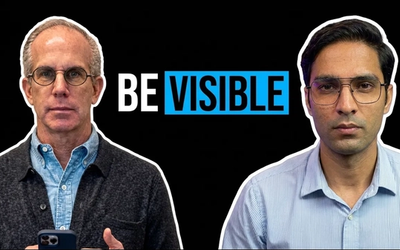
Bob Martin
View LinkedIn ProfileEpisode Notes & Transcript
Lawyers and professionals spend far too much time growing their practice, and thus forget to reflect on the real point of it all: who they want to become and the life they really want to live. Lawyers tend to over-rely on transactional relationships and chase social media validation. Maintaining this stiff, stagnant facade leads to burnout and a loss of their actual identity. On the contrary, long-term fulfilment may lie in something a little more balanced: professional growth which doesn’t come at the cost of self-awareness, intentionality and deep human connection.
Moving past the facade of success, fame and wealth, a meaningful career is built on more internal matters. An attorney must reflect upon themselves and where they are, and they must be curious about people, experiences, discomforts. No matter what, one’s core values must stay constant and present.
In this episode, we sit down with Bob Martin - retired trial attorney, clinical social worker, meditation mentor, and law professor. He breaks down how lawyers can navigate perfectionism, build authentic relationships, maintain neuroplasticity and design their practices with real motivation.
Timestamps:
00:01:55 – The Transactional Culture
00:06:45 – Social Media Pressure on Lawyers
00:08:18 – Designing a Life vs. Just Growing a Practice
00:09:58 – Authentic Identity & The Social Mask
00:19:23 – AI Affirmations vs. Genuine Relationships
00:21:40 – Moving Past Failure
00:26:31 – Critical Thinking and Brain Plasticity
00:32:10 – Discomfort and Burnout
00:37:05 – Generosity and Negative Thoughts
00:41:43 – Gratitude
00:47:13 – Redefining Success in the Legal Profession
Full Transcript:
Awais Hello everyone. Welcome to the podcast. Today we have a very special guest who has been a trial attorney, a clinical social worker, and a meditation mentor. He has spent a lifetime navigating the space between power, pain, and inner life. Now he’s bringing that rare perspective to The Flow, his commentary series. Thank you, Bob, for joining me today.
Bob Martin Thank you so much for having me. I want to thank you for the work you do with this podcast. There is so much effort involved, and you give people like me a platform to talk about the things we love.
Awais It’s a pleasure to have you. I started this podcast to learn more about the legal industry in depth and meet inspiring people. To start off: early on, I struggled with outreach. I would call law firms, only to be questioned by gatekeepers who assumed I was trying to sell them something or charge them for an appearance. Why has the world become so transactional that normal human conversations between industries feel so difficult?
Bob Martin We live in a free-market society, and when we operate in business, transactional thinking can take over our identity. People project their own posture onto others—if they are transactional, they assume you are too.
My father always taught me: "Don't worry about the future. Just take care of what's on your plate, do the next right thing, and the future will take care of itself." For planners and perfectionists consumed by anxiety and uncertainty, that takes faith. But if you experiment with doing the next right thing, life becomes much easier.
Awais That resonates. I talk to many lawyers, and many are under immense pressure. I met an attorney in D.C. who was constantly striving to present a perfect image on LinkedIn. She was seeking validation through impressions and constantly comparing herself to competitors, which made her miserable. How can lawyers—whether starting their own firm or working as associates—relieve themselves of this perfectionist trap?
Bob Martin After retiring from law, I was invited to teach at Elon University, which has a wonderful Design Center. Design thinking encourages us to plan based on who we want to be and what kind of life we want to live. We get so focused on growing a business that we forget to ask: Who am I? What kind of life do I want? Ultimately, as the Dalai Lama notes, everyone just wants to be happy.
There are two major factors here. First, human neurology evolved for small tribal groups, not modern society where a "tribe" consists of 35,000 followers. We are an evolutionary mismatch for today’s hyper-connected culture.
Second, we rarely spend time building an authentic identity. When we feel inauthentic, we lose confidence and pour energy into maintaining a social mask rather than nurturing our true self.
Awais How do people actually find their authentic self, especially when starting out?
Bob Martin It is an experimental process and a practice. You must sit with the question: Who am I really? Who we are isn't defined by a single cause; it's a collection of past experiences, upbringing, and external messages.
When we are young, we internalize messages before we can process them intellectually. For example, if a parent frantically pulls a child away from traffic, the child might internalize "I am bad" rather than "I did something unsafe." Yet, because the parent also cares for them, they receive messages that they are good.
We carry these core beliefs into adulthood. To hide the parts of ourselves we feel are lacking, we construct a social mask. Ironically, we think the mask is a fraud, but because we consciously created it, it contains our true creative expression—while the negative beliefs we assumed were "truth" were actually misconceptions. Unpacking that is like a lawyer sifting through conflicting evidence to build a coherent theory of the case. What is the theory of your life?
Awais That makes so much sense. Back in college, I wasn't a reader because teachers pushed genres I disliked. During a college interview, feeling social pressure, I claimed I loved reading and cited The Da Vinci Code. When asked for a summary, I froze because I hadn't actually read it, and I was rejected. That failure forced me to realize I should develop a genuine reading habit.
Online, however, people rarely challenge what you say. You see posturing receive praise. Where does self-accountability come from in an environment like that?
Bob Martin Even modern AI tools like ChatGPT are programmed with just enough affirmation to keep you engaged, reflecting our social media culture.
We don't need thousands of superficial affirmations; we need genuine connections with a few close friends. Building authentic relationships requires pushing past the fear of rejection.
Our culture treats failure as inherently bad, but Thomas Edison famously said, "I have not failed. I've just found 1,400 ways that won't work." Failure is an essential part of learning. Growth happens at the edges of your comfort zone, not in the middle. We also must cultivate curiosity—learning and understanding how things work simply for the joy of knowing, not for likes or external validation.
Awais My secretary and I recently debated whether critical thinking is innate. My view was that everyone has the potential for critical thinking, but they must develop curiosity to question things rather than passively following the crowd. Do you agree?
Bob Martin People are born with the capacity for critical thinking, as well as the capacity for rigid, black-and-white thinking. The brain builds physical neural pathways based on repetition—"neurons that fire together, wire together."
For example, studies on London taxi drivers showed that memorizing thousands of streets physically enlarged their hippocampus. You can literally reshape your physical brain with your mind. If neural pathways for critical inquiry are thin, thinking deeply feels like hard labor. As pathways thicken through practice, it becomes enjoyable and intuitive.
Awais What environment best fosters that development?
Bob Martin Being comfortable with challenge and discomfort. Modern life is physically comfortable—we buy food at stores rather than hunting or carrying water. Because we rarely face severe physical hardship, minor discomforts feel overwhelming, leading to burnout.
If you build mental strength to tolerate discomfort, life's daily problems feel far manageable. Practices like meditation, daily routines, or simply appreciating beauty help anchor the mind. Every morning at 4:00 AM, I walk my dogs, sit on a bench, feel the air, and watch the sunrise. Bringing beauty into your routine reminds you that you aren't carrying the weight of the world alone.
Eastern psychology notes three root causes of inner discomfort: wanting (attachment), not wanting (aversion), and ignorance. You cannot eliminate negative thoughts purely through suppression, as they are tied to survival instincts. Instead, you consciously practice their antidotes: generosity for wanting, compassion for aversion, and neutral self-inquiry for ignorance.
Awais That is profound. I once met a man who appeared poor, yet when I offered him money, he refused, saying he was just sitting there thankful for the oxygen he breathes. People get caught up chasing status and wealth while missing basic daily miracles.
Bob Martin Thich Nhat Hanh said, "Some people think walking on water is a miracle, but walking on the land is a miracle." Albert Einstein noted that you can live life as if nothing is a miracle, or as if everything is. Appreciating the small things is the core practice of a fulfilling life.
Awais For lawyers setting out to build a firm, how should they approach goal-setting so they don't give up when progress feels slow?
Bob Martin If someone becomes a lawyer solely to make a million dollars, I feel for them—not because they won't reach it, but because money alone won't make them happy. That is a thin, naked goal.
Instead, ask: What is the miracle of practicing law? What world am I trying to create? If your primary goal is to be a great advocate, transform lives, and bring meaningful resolution to clients, your daily steps align naturally. The finest attorneys I have known—including criminal defense lawyers representing severe cases—are deeply compassionate people who genuinely care for their clients.
When evaluating your path, ask yourself:
- What kind of world am I building?
- Am I choosing inclusion or exclusion?
- Am I listening to my better angels or my fears?
Focus on the immediate step in front of you. I grew up in traveling carnivals selling hot dogs and never expected to go to law school. A mentor encouraged me, bought my LSAT voucher, and when I first sat in law school and declared I wanted to make a difference, a surge of energy went through me. That purpose carried me through my entire career. At 76, I am a happy man, and that is what counts.
Awais Bob, this has been an extraordinary conversation. Thank you so much for sharing your wisdom today.
Bob Martin Take the time to seek out beauty, bring it into your life, and keep your heart open. The world is a wonderful place to live in.
Resource & Downloads:
📊 Book a Strategic Law Firm Growth Audit
About the Guest:
Bob is a retired Trial Attorney, Clinical Social Worker, Meditation Mentor and Law Professor at Elon University. He draws on a lifetime navigating the specific space between power, pain and transformative inner growth, thus able to provide a distinct perspective on living truly, overcoming societal pressure, and finding genuine peace in high-pressure professions.
About the Host

Awais Haq
Legal Tech Consultant & The Lawyer Podcast Host
From civil engineering to revolutionizing legal tech, I’m a problem-solver driven by impact. Disillusioned by industry malpractice, I pivoted to build tech solutions that matter - first scaling an online tutoring marketplace to $800K ARR, then founding Time Technologies LLC in Nov 2024. With 19+ projects across edtech, government security, and AI, I now focus on empowering small to mid-sized law firms by slashing admin burdens.


Was this episode helpful?
Your feedback helps us improve our content.
Share this Podcast
0 Comments
or to leave a comment