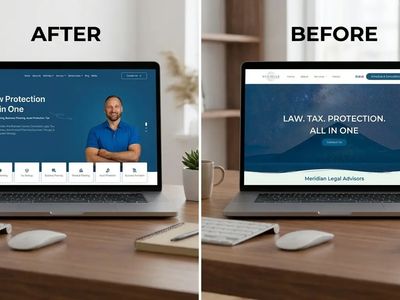
A Case Study For Bick Law LLP
We built a high speed law firm website demo with built-in lead qualification and Clio-integrated client portal, improving efficiency and reducing paralegal costs.


Tucson is a separate market from Phoenix. A Tucson firm competes with other local firms and with national firms that have opened offices here.
We run law firm marketing in Tucson for firms that want to be found in Pima County. We handle the marketing and the intake. Then we trace every call and form to the case it produced, so you know what each channel cost and what it brought in.
Tucson is the county seat of Pima County, home to more than a million people. Local firms compete with each other and with national firms that opened offices here.
Most local firms are small. A directory snapshot lists 755 firms, and the top listings we reviewed had a median of two lawyers. A small firm wins by picking its searches and its neighborhoods, not by matching a national firm's budget.
The clients shape the work. Many are Hispanic or Latino, many are older, and many own their homes. That points to family, injury, immigration, estate and bankruptcy cases. It also points to Spanish-language pages written by a native speaker, not translated.
The numbers behind this are in the questions below.
Every service below points at one number: what a signed case costs you.

We tag every call, form, chat and referral at the source and send it to your practice management system. One Tucson phone line takes family calls and injury calls side by side. The report splits them apart and shows what each one cost.

Tucson covers 226.71 square miles. A firm downtown serves different people than a firm in the Catalina Foothills or Oro Valley. We build pages for the city and for the areas you actually work in.
The deeper build is on our Tucson law firm SEO page.
See Tucson law firm SEO.

National injury firms bid on Tucson searches. We bid by case value and block the searches that never turn into cases. Phoenix traffic stays out of your Tucson budget.

Your site has to work for the clients you serve. In Tucson, that means Spanish-language pages if you serve Spanish-speaking clients, and type that stays readable on a phone. We build fast sites that carry the Arizona disclaimers and send every form into your intake.

We write answers to the questions clients ask before they call. The pages follow Arizona law and Pima County practice. The Superior Court hears criminal, civil, family law, juvenile and probate matters, so each page should name the court the client will use. A page that fits any state gets ignored.

When someone asks an AI assistant for a lawyer in Tucson, the answer comes from pages that respond plainly. Those pages name the city, the court and the practice area. They also name your firm, which ER 7.1 requires anyway.
See AI SEO for law firms.
Chat and voice agents answer after hours, ask the first questions, and write the lead into your CRM. Arizona allows this. Tell clients the agent is not a person. Someone weighing an estate plan or a divorce reads a clumsy script as a preview of the whole job.
Each practice area has a different client and a different speed of decision. Tucson shapes each one in its own way.

Family clients compare several firms and read the reviews closely. Pima County Superior Court hears family law matters. You earn the call before it happens, then you pick up the evening someone decides. Spanish-language intake matters here. Reference: `/industries/family-law`

National firms with Tucson offices have staff and budgets to match. A focused firm wins on the case types it handles best and the parts of the city it serves. Reference: `/industries/personal-injury`

Calls come at night. Sometimes the caller is a family member. Tucson City Court and Pima County Superior Court are different venues, and availability decides who gets the case. After-hours intake is a marketing decision. Reference: `/industries/criminal-defense`

Clients search in their own language and ask their community first. Tucson sits close to the border, so Spanish is a real channel. Pages in each language you serve do more here than a wider English campaign. Reference: `/industries/immigration`

Estate work is planned months ahead and starts with a question about a trust or a will. Many clients are older homeowners. The firm that answers the question plainly gets the consultation. Reference: `/industries/estate-planning`

Debt clients want a fee and an eligibility answer before they talk to anyone. A clear fee page and a short eligibility form do most of the work. That holds on the south side and in Spanish. Reference: `/industries/bankruptcy-law` ---

Download the full funnel attribution case study


They took the time to understand our goals, listened to feedback, and made thoughtful recommendations that have significantly improved the overall design and user experience.
”
What each service does for a Tucson firm, where it stops, and what the Arizona rules require.
Start with the gap in your intake, not a package. If calls and forms are not tracked, fix tracking first, because every later decision depends on it. If tracking works but the site cannot rank, start with search. If the site is slow, hard to read on a phone, or missing practice pages, start with the website. If nobody answers the phone, fix that before you buy another click.
Attribution tags calls, forms, chat and referrals at the source. It sorts them by practice area and follows them through your practice management system to the signed retainer. That matters in Tucson because one phone line takes family, injury and immigration calls. It does not credit every client. Word of mouth, lawyer referrals, and people who research for weeks and then call from a different device often show no source. We label those unattributed instead of guessing.
Ads stop when the budget stops. Pages keep working after the spend. Tucson searches vary by practice area and court, and a page that names the court and the neighborhood holds its spot longer. Narrow Tucson terms take three to six months to move. Competitive injury terms take longer. SEO cannot create demand for a practice area nobody searches. It cannot beat a firm with much stronger authority on a short timeline.
Ads make sense when the searches exist, the case values support the click, and the firm answers the phone. They also buy time while the pages are built. The waste comes from broad geography, broad match, and terms that never become a case. A Tucson budget should exclude Phoenix-wide traffic and searches outside Pima County unless the firm serves them. Ads cannot fix a slow intake, and no agency can promise a number of leads.
The site must load fast on a phone and use readable type. It needs Spanish-language pages where the firm serves those clients, the Arizona disclaimers, and a form that reaches the intake system. In this market, language and readability are required. Design cannot fix a weak offer, a slow intake, or missing practice pages. The site also has to work with screen readers, which is a usability issue before it is anything else.
A service page says what you do. Content answers the question the client types before they are ready to call: what happens at a Pima County custody hearing, what to bring to an immigration appointment, how probate works in Arizona. AI assistants draw from that same material. Content is slow and needs a writer and a legal reviewer. Thin content does not rank. It cannot replace a clear service page or a working intake.
AI answers pull from pages that already rank and explain the question plainly. The work is structure, clear entity information, and pages that state the firm, the venue and the practice area without confusion. Referral traffic from AI is still unproven. AI surfaces change fast, and no one can guarantee a firm appears in an AI answer. We treat it as an extension of search, not a separate channel with its own forecast.
It answers after hours, asks qualifying questions, books appointments, and writes the lead into the CRM. A person must handle anything that needs judgment: a conflict check, a legal question, an emergency, or a caller who asks for a human. Arizona allows the tool, and the firm should say plainly that the agent is not a person. The bot must not give legal advice or suggest that an attorney-client relationship exists.
ER 7.1 covers anything the firm says about its services: the website, ads, SEO pages, video and Spanish pages. Every page names the lawyer or firm and gives contact details. Nothing may be false or misleading, including by leaving out a fact. Results need a disclaimer that outcomes vary. Naming a former client needs consent. "Certified specialist" is reserved for lawyers certified by the State Bar. We are not your compliance lawyer, so send borderline claims to yours.
We measure cost per signed case by channel, followed through your practice management system. A low cost per lead can hide cases you do not want. A high cost per case can still pay off if the cases are good. The numbers cannot tell you what would have happened without the marketing. We report the unattributed share instead of handing it to the channel that looks best.
The tools we use, chosen per firm and kept in the firm's name where possible.


Tucson legal marketing starts with tracking. Nothing is spent before it works.
We find the Tucson and Pima County searches that exist and see which firms show up. Then we pick the ones a firm your size can hold.
We review the claims, the firm name, the disclaimers and the intake scripts against ER 7.1 and ER 7.3. Anything borderline goes to your compliance lawyer or outside counsel.
We tag calls, forms and referrals and connect them to your practice management system. The first month of spend then gives you evidence you can act on.
Practice-area and city pages come first. Paid channels come second. A monthly report by signed case decides where the next dollar goes.
Still deciding? Ask us directly and we will answer without a pitch.
Tucson had 542,629 residents at the 2020 census, and the Census Bureau's 2025 estimate is 548,371. Pima County had 1,043,433 in 2020, with a 2025 estimate of 1,074,685. The city holds about half of the county. A firm that writes only about Tucson skips the other half, so Pima County law firm marketing needs pages for the areas where you take cases. Growth since 2020 is slow: about 1% for the city and 3% for the county. A firm grows by winning more of the searches that already exist.
A directory snapshot lists 1,161 lawyers across 755 firms. That is about 1.5 lawyers per firm. The top listings we reviewed had a median of two lawyers. National personal injury firms have opened Tucson offices too. The snapshot is not an official count, so read it as a sense of scale. Tucson attorney marketing for a small firm works best when the firm picks a few searches and a few neighborhoods. It cannot outspend a national firm.
If you serve Spanish-speaking clients, yes. 42.2% of Tucson residents are Hispanic or Latino. South Tucson is 76.46% Hispanic or Latino, and 61.8% of its residents report Spanish as their language. A translated page falls short. The page needs its own keyword research. A native writer drafts it, and a reviewer checks the legal terms.
21.9% of Pima County residents are 65 or older, and 63.6% of occupied homes are owner-occupied. Those numbers point to estate planning and probate work. The firm that answers a question about a will or a trust plainly gets the consultation. Pages for this group need large, readable type and a phone number at the top, not only a form.
Tucson covers 226.71 square miles. A firm downtown serves different people than a firm in the Catalina Foothills or Oro Valley. Your pages should match the areas you actually work in. A page for an area you do not serve brings calls you cannot take.
Tucson is 108 miles from Phoenix. It is a separate media market with its own courts and its own firms. A shared budget lets Phoenix searches eat the Tucson spend, so we keep the budgets apart. Tucson is also 60 miles from the U.S.-Mexico border. That is why immigration work and Spanish-language intake matter here.
The census figures are official. The directory count is a snapshot, not a census, and it will shift. We use the numbers to choose where to spend, then check the choice against your own call and case data. Your signed cases are the number that counts.
Yes. We work in Phoenix, Scottsdale, Mesa, Tempe, Chandler and Gilbert, and each market gets its own plan. A firm with offices in two cities gets reporting by office. A lead that starts in Tucson and closes in Phoenix must be counted once.
We commit to the work and the reporting. You get tracking that credits every call and form, and a monthly report of cost per signed case by channel. The pages we build target searches that exist. We do not promise a position or a lead count. Google controls the results, and your competitors set the pace. If an agency offers a guarantee, ask what happens when it misses.
Each city gets its own page and its own ads. Both feed one report. The Tucson page targets Tucson and Pima County searches, and the Phoenix page targets Phoenix. Budgets stay separate, so one market cannot hide a problem in the other.
A two-lawyer firm is normal in Tucson. A small firm does better owning a few searches in one part of the city than spreading a small budget across Southern Arizona. We pick two or three practice areas, build the pages that can win, and tell you which searches to leave alone. If the budget is too small for an area, we say so.
Three things: someone who answers the phone, a way to track where each call came from, and a person at the firm who can approve claims and pages. If one is missing, the first month goes to fixing it instead of buying traffic. We tell you that before you sign.
One office can serve the county, but the marketing has to say so. We build the Tucson page for the city. Then we add pages for the places where you take cases and where the searches differ. The service area in your profile must match your pages. A firm that lists the whole county but writes only about Tucson sends mixed signals.
Start with case value and search demand. A practice area with high value and real searches can take more, but only if intake can handle the volume. We set a floor for each area so neither goes dark. After the first 90 days, we move the rest toward the lower cost per signed case.
We review what exists before we recommend a rebuild. If the tracking works and the pages are sound, we keep them. If not, we fix the foundation first. We ask for read-only access at the start, run the audit, and give you a written plan before anything changes. You do not have to cancel the existing contract to get the audit.
The domain, the website, the analytics, the ad accounts, the Search Console property, the call tracking and the CRM stay in your name. We hand over the documentation for what we built, including the page list, the keyword map and the tracking setup. Nothing is held hostage.
We will map the searches that name Tucson and Pima County and show you which firms hold them today. Then we will tell you what it would take to move. The session is free and takes 30 minutes.




Growth marketing for law firms
Legal intake solutions
Operations excellence for law firms
Practice areas we serve
Locations We Serve
1070 Montgomery Rd, Unit 594, Altamonte Springs, FL 32714
Building A1, Dubai Digital Park, Dubai Silicon Oasis, Dubai, United Arab Emirates
157-P, Gulberg 3, Lahore