A Case Study For Bick Law LLP
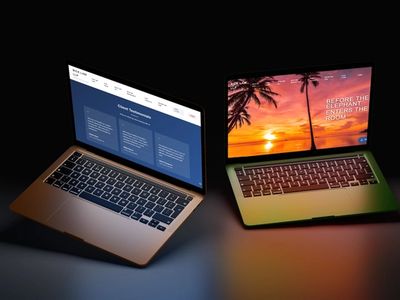
We built a high speed law firm website demo with built-in lead qualification and Clio-integrated client portal, improving efficiency and reducing paralegal costs.


Someone in Scottsdale needs a lawyer. They search on Google, see a Phoenix law firm, and call them instead.
Your next client looks in several places: Google, a paid ad, a social post, an AI assistant. A firm that appears in one of them loses the rest.
We build the presence in all of them. Paid, organic, social, and the chat on your site. Each piece of content is written for the point in the decision where it gets read.
Then we follow the client. Every call, form and chat is traced from the channel to the case, so you see what it cost to acquire them and what they are worth over time.
Scottsdale shares a border with Phoenix. Google does not know where the city limits are, so when someone in Scottsdale searches for a lawyer, they see Phoenix firms in the results. Those firms' budgets set what a click costs.
You do not have to outspend them. You need to show up for the searches that name Scottsdale, answer faster than the Phoenix firm that got the call, and know which searches turned in to signed cases.
About 34,000 companies operate in Scottsdale and support more than 200,000 jobs. The economy runs on financial services, healthcare, bioscience and tourism, and visitors add an estimated $2.5 billion a year, according to the City of Scottsdale's 2023-24 overview. Business, estate and injury work all come from that same base.
Arizona also changes what your marketing can say. The state rewrote its ethics rules in 2021 and now lets people who are not lawyers own part of a law firm. Both affect what you can say about your firm, and who is allowed to help you say it.
Every service below points at one number: what a signed case costs you.

Calls, forms, chat and referrals tagged at the source and carried into your practice management system. Business, estate and injury clients reach the same phone line here, so the report splits them apart and shows what each one cost. See our attribution and analytics service.

Scottsdale covers 184.5 square miles and stretches 31 miles from end to end, so a firm in the south serves different neighborhoods from one near the northern border. We build pages for the city and for the areas you actually work in, from Old Town and the Airpark up to North Scottsdale. See our Scottsdale law firm SEO service.

Phoenix firms bid on Scottsdale searches, and their budgets set what a click costs. We bid by case value, block the searches that never convert, and keep Phoenix-wide traffic out of a Scottsdale budget. See our PPC and Google Ads for law firms service.

Your clients are older and better educated than the national average: a median age of 48.7, and three in five over 25 with a degree. They read a site closely, and they notice a slow page or a missing detail. We build sites that load fast on a phone, carry the Arizona disclaimers, and feed your intake. See our law firm website design service.

Answers to the questions clients ask before they call, written around Arizona law and Maricopa County practice. A page that could describe any state does not survive a reader who checks, and it does not outrank the firm that did the work. See our content marketing for law firms service.

AI legal marketing is still page work. When someone asks an AI assistant for a lawyer in Scottsdale, the answer is assembled from pages that answer the question plainly and name the city. Those pages also have to name your firm, which ER 7.1 requires in any case. See our AI SEO for law firms service.
Chat and voice agents that answer after hours, qualify the matter and write the lead in to your CRM. Arizona permits this, provided the firm says the agent is not a person. A client weighing an estate plan or a divorce reads a clumsy script as a preview of the whole engagement. See our AI chatbots for law firms service.
Each practice area brings a different client and a different speed of decision. Scottsdale changes each one in its own way.

Family clients compare several firms and read the reviews closely. The work is earning the call before it happens, and being reachable the evening someone decides.

Injury keywords cost more per click than any other practice area, and the Phoenix firms bidding on them have larger budgets. A focused firm wins on the case types it handles well and the areas it actually serves.

These calls come at night, and the person calling may be a family member. Availability decides the case, which makes after-hours intake a marketing decision.

Clients search in their own language and ask their community first. Pages in each language you serve do more here than a wider campaign in English.

Debt clients want a fee and an answer on eligibility before they speak to anyone. A clear fee page and a short form that checks eligibility do most of the work.

Estate work is planned months ahead and starts with a question about a trust or a will. The firm that answers that question gets the consultation.

Download the full funnel attribution case study

They took the time to understand our goals, listened to feedback, and made thoughtful recommendations that have significantly improved the overall design and user experience.
”
The compliance questions come up on most first calls, so they are answered here.
Every communication about your services has to name the lawyer or firm responsible for the content and give some contact information: address, website, phone or email. That is ER 7.1.The same rule bars anything false or misleading, including a statement that leaves out a fact needed to make it accurate.
Broad, truthful marketing is fine. Guarantees are not. The State Bar gives "guaranteed results" as an example of a claim that fails both tests, because a lawyer cannot guarantee a result and the claim creates expectations nobody can meet.
Yes, since the 2021 amendment. A lawyer may say they specialize in a field if they have real expertise or limit their practice to it. "Certified specialist" is narrower: that phrase is reserved for lawyers certified by the State Bar of Arizona Board of Legal Specialization.
This is one of the few places Arizona is more permissive than lawyers expect, and one of the easiest to get wrong in the other direction.
Results: yes, with care. No disclaimer is strictly required, but the State Bar recommends one saying that results vary and a similar outcome is not guaranteed. Naming a result in a way that could identify a former client requires that client's consent, even when the case is a public record.
Reviews and endorsements are permitted. We write them to describe the work itself.
No. There is no pre-publication review. A firm may ask the State Bar's Practice 2.0 Department for a voluntary review, and we will say so when we think a claim is worth asking about.
One exception matters if you run outbound campaigns. Direct mail or email solicitation aimed at people you know need legal services has to carry an ADVERTISING MATERIAL disclaimer on the outside of the mailing, and sample copies go to the State Bar with a list of recipients.
Arizona removed the rule that barred non-lawyers from owning part of a law firm. ER 5.4 was eliminated in August 2020, and the state has licensed alternative business structures sinceJanuary 2021. By the end of 2025 there were 152 active licensed ABS entities in Arizona.
That means a marketing partner, a technology company or an investor can hold equity in a firm here. It also means the firm's compliance lawyer has a duty to supervise non-lawyers, specifically in matters about legal services advertised or provided. When a marketing vendor touches your advertising, it is inside that duty.
Not yet. You would be bidding against firms with bigger budgets, and the client reading those results sees firms that are not in Scottsdale.
Marketing to the metro makes sense once you rank for the Scottsdale searches. Before that, most of the budget buys clicks you cannot afford.
The deeper search work is on our SEO for law firms page.
Yes, with limits. ER 7.3 bans live person-to-person solicitation, which covers phone calls and door-to-door contact with someone who has a known legal need, such as a person named in a divorce filing. Mailers and email are permitted unless the person has asked you to stop.
If someone tells your firm not to contact them, that has to be recorded and honored.
Arizona permits it. The State Bar asks that the firm make clear the chatbot is not a real person, and that it be tested properly before it goes live. A chatbot that gives wrong answers is not treated as an ethics breach, but it costs you clients.
We put the disclosure in the interface itself, where it is read.
None is mandatory once the firm name and contact details are there. The State Bar recommends three statements: that the site is regulated by the Arizona Rules of Professional Conduct, that reading it does not create an attorney-client relationship, and that sending unsolicited information does not create one either.
We put all three in the footer and one at the point where a form is submitted.
Cost per signed case, by channel. Every call and form is tagged at the source and followed through your practice management system to the retainer, so the monthly report ends in clients.
The other number is what a client cost. That is the one to compare between agencies.
Nothing is spent before the tracking works.
Which Scottsdale searches exist, which Phoenix firms appear in them, and which of those searches a firm your size can hold.
The claims, the firm name, the disclaimers and the intake scripts reviewed against ER 7.1 and ER 7.3, with anything borderline sent to your compliance lawyer or outside counsel.
Calls, forms and referrals tagged and connected to your practice management system, so the first month of spend produces evidence you can act on.
Practice-area and city pages first, paid channels second, and a monthly report by signed case that decides where the next dollar goes.
Legal marketing and intake for firms in Scottsdale, reported by cost per case signed.
We built a high speed law firm website demo with built-in lead qualification and Clio-integrated client portal, improving efficiency and reducing paralegal costs.
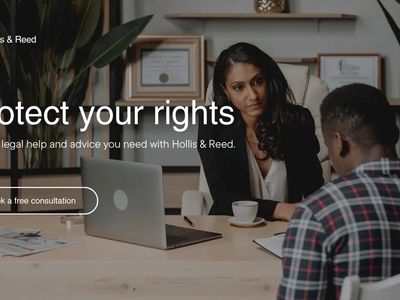
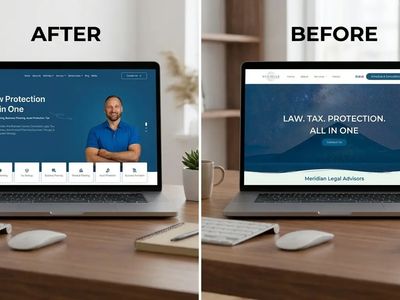
We gave their website a complete overhaul which improved credibility, clarified services, and streamlined the conversation of clients with a structured and user-friendly layout.

Building an AI operations layer for Myers, a personal injury firm
We will map the searches that name Scottsdale, show you which firms hold them today, and tell you what it would take to move. Free, 30 minutes, no obligation.
Still deciding? Ask us directly and we will answer without a pitch. ask@timetechnologiesllc.com
Yes. Mesa, Tempe, Chandler and Phoenix are all markets we work in, and each one needs its own plan. A firm with offices in two cities gets reporting by office.
No. Search results depend on your competition, your reviews and how quickly your intake answers the phone. What we commit to is the process: tracking that works, pages built for real searches, and monthly evidence of what each channel produced.
Tracking is live in the first month. Paid channels produce readable data within weeks. Search takes several months, and the timeline depends on how many Phoenix firms are competing for the same terms.
Yes. A solo or two-lawyer firm does better owning a handful of searches in one part of the Valley than spreading a small budget across the metro. Larger firms can cover more ground.
You do. The domain, the analytics, the ad accounts and the CRM stay in your name, and you can move them to another vendor.
We look at your site, your rankings and where your leads come from before the call, so the 30minutes are spent on your numbers. You leave knowing which searches you are losing and what it would take to win them.
Website design comes first. If a page loads slowly on a phone, or Google cannot follow the structure, the rest of the work has nothing to stand on.
SEO builds on that: a page for each practice area, a page for Scottsdale, and a complete GoogleBusiness Profile, so your firm shows up when someone searches.
Content marketing supplies the answers those pages are built on. That is what makes a page rank, and what makes the person call.
The AI search work uses the same pages, because AI assistants take their answers from pages that already rank.
Google Ads and attribution are not part of this. Ads buy the click while the pages are being built, and attribution shows which channel produced the client.
Start with whether the person is already looking. On Google, someone types the problem: "divorce lawyer scottsdale", "injury attorney near me". The intent is declared, and you bid against other firms for that search. On Facebook and Instagram nobody is looking for a lawyer, so the click costs less and it converts less. Where Meta earns its place is the people who already visited your site and did not call, and a case type with low search volume that affects a lot of people.
For most Scottsdale practices, Google comes first, because the searches exist and the client is choosing this week. Judge both by cost per signed case. A cheap Meta click that never becomes a client costs more than an expensive Google click that does.
Yes. A page cannot rank if Google cannot read it, or if it takes too long to load on a phone.
Speed, mobile layout, a clear title on every page, and one page per service are the basics.
We fix those before writing anything new, because new pages on a slow site waste the effort.
For the map results at the top, yes. What puts you there is a complete Google Business Profile, the same name, address and phone number on every directory, and how close your office is to the person searching.
Reviews then decide which of those results gets the call. Recent ones count for more than a burst from three years ago, and a review that names the work, such as "handled our custody case", reads better than "great lawyer".
Reply to every review, and reply within a day. The next client reads your answer as closely as the review itself.




Growth marketing for law firms
Legal intake solutions
Operations excellence for law firms
Practice areas we serve
Locations We Serve
1070 Montgomery Rd, Unit 594, Altamonte Springs, FL 32714
Building A1, Dubai Digital Park, Dubai Silicon Oasis, Dubai, United Arab Emirates
157-P, Gulberg 3, Lahore