

Web Design and Development in Toronto for Law Firms
More than half of Ontario's lawyers work in the Toronto region. A firm here competes for every search against more firms than anywhere else in the province. We build sites that turn a visitor into a booked consultation.

What the site is for
Most law firm sites list the firm's history, its team and its practice areas. A person searching for a family lawyer at nine at night wants to know whether the firm handles their problem, how to reach a person, and what happens when they call.
We design the page around those answers, starting with the consultation request.
What Goes Into Every Toronto Law Firm Website
These are part of every build, at any budget.

Conversion optimization
Every build is measured against one number: how many visitors become booked consultations. We track where people leave the form, which pages produce enquiries and which calls turn into cases, then change what those numbers point at.

The consultation request comes first
The request is the most important element on the page, so it is designed first. Forms, phone numbers and booking links sit where people look for them.

Mobile first design
Most legal searches happen on a phone, so the phone layout is drawn before the desktop one. Tap targets sized for a thumb, text that reads without zooming, forms short enough to finish with one hand.

Speed on a phone
We test on real devices over a mobile connection and measure how long the page takes to become usable. Older hosting explains most of it, and it is fixable.

Accessibility
Keyboard navigation, real heading structure, readable contrast, text that resizes. We build to the WCAG 2.0 A and AA criteria from the start.

Intake connected
Forms write into your CRM, calls are tracked, and the source of each enquiry travels with the lead.
Ownership
The domain, the code, the analytics and the CRM stay in your name. You can move them to another developer.
Websites by Practice Area
A personal injury site works for someone who has just been hit. A family law site works for someone who has been thinking about it for months. The practice area sets the structure and the calls to action.

Family Law Websites
The visitor has been thinking about this for months and reads several pages before calling. The site needs plain answers on process, timing and cost, and one obvious way to ask a question.

Personal Injury Websites
Someone has just been hurt and is reading on a phone. The number stays reachable through the whole page, the form asks for a name, a number and what happened, and the page opens fast on a mobile connection.

Criminal Defence Websites
These enquiries arrive at night and at weekends, and the person is usually asking for someone else. The site takes details at any hour, confirms when a reply is coming, and keeps the form short.

Immigration Websites
Some clients read in a language other than English. Each language gets its own pages, and the intake form records the matter in English for the firm.

Estate Planning Websites
The reader is comparing approaches and wants to know what each document does and what preparing it costs. Longer pages that explain the work suit this practice, with the request form at the end.

Bankruptcy Websites
Fee questions come first and eligibility second. A clear fee page and a short qualifying form sort enquiries before they reach the team, which saves the intake call.

Zahid Law: A Family Firm in Scarborough Site Rebuilt
Download our Website & SEO Checklist


Perfect website, my partners loved the design. Your team has done a tremendous job!
”How a Build Runs
The design starts after the content is agreed.
Discovery and content audit
What your current site does, where its enquiries come from, what competitors' sites do better, and which pages already earn search traffic that a rebuild has to keep.
Structure before design
Page by page, what each one is for and what a visitor needs from it. The sitemap and the calls to action are settled here.
Build
Design and code together on Next.js or WordPress, depending on the firm. Content loaded, forms wired to your CRM, calls tracked, accessibility and speed tested on real devices.
Launch and measure
Redirects mapped so existing rankings hold, analytics and dashboards live on day one, and a first report in the first month.

Find Out What Your Current Site Is Costing You
We will look at how your site loads, where visitors drop off, and what it currently converts. Free, 30 minutes, no commitment.

Questions Toronto Firms Ask Before a Rebuild
These come up on most first calls.
Do we have to make our website accessible under the AODA?
Fewer firms are covered than people assume. Since January 1, 2021, Ontario's accessibility law requires a business or non-profit with 50 or more employees to make its public website meet WCAG 2.0 Level AA. Live captions and pre-recorded audio descriptions are excepted. Designated public sector organizations are covered as well. A firm below 50 employees is not caught by the website rule.
A firm above the line should plan for the requirement during a rebuild. A firm below it still gets value from an accessible site, because clients include older people, injured people and people reading on a phone. We build to the standard either way and will tell you which side of the line you are on. That describes the rule. It is not legal advice, and your own counsel should confirm how it applies.
What does a law firm website cost in Toronto?
It depends on the page count, the intake integration and whether the content already exists. We will not quote a figure before the content audit. The cost goes to content, structure, build and integration, in that order of impact on results.
Do you help with UI/UX design for law firms?
Yes. We help law firms create websites that are easy to use, simple to navigate, and designed to turn visitors into potential clients. We use tools like Figma for wireframes and interactive prototypes, and Google Analytics 4 and Microsoft Clarity to understand how visitors use your website and where they may get stuck. As a UI UX design agency for law firms in Toronto, we focus on helping potential clients find the right legal services, build trust in your firm, and contact your team with ease.
Can you fix our current site instead of rebuilding it?
Sometimes, and we will say so when it is true. If the structure and the platform are sound, a rebuild wastes money. If the site is slow because of the platform, or the intake loses leads, patching it costs more across two years than replacing it.
What happens to our search rankings during a rebuild?
Rankings hold when every existing URL is mapped to its new one, the pages that already earn traffic are kept, and the redirects are tested before launch. We plan that before the build starts.
Which platform do you build on?
It depends on the firm. Next.js for firms that want speed and control without plugin maintenance. WordPress where the team updates content daily and wants the familiar admin. We recommend whichever fits.
Do you write the content?
Yes. We write the page copy from your practice areas, your city and the questions your intake team hears, then you review it.
Do the Law Society's advertising rules apply to website content?
Yes. Section 4.2 of the Rules of Professional Conduct defines marketing to include a firm's website, alongside its name, letterhead and logos. Rule 4.2-1 requires the content to be demonstrably true, accurate and verifiable, and neither misleading nor likely to mislead. Rule 4.2-1.1 requires the site to identify the firm as licensed lawyers.
Rule 4.3-1 and Rule 4.2-2 shape the pages we build. The first stops a firm describing itself as a specialist without Law Society certification, so a practice-area page says what the firm does and for whom. The second applies to any fee shown on the site: the price has to say what service it covers, whether disbursements and tax are extra, and the firm has to charge it.
Ontario does not require a website to be filed with the Law Society before launch. Your firm remains responsible for compliance, so we check the claims and send you anything borderline before the site goes live. That describes the rules. It is not legal advice.
Can the site show client reviews and case results?
Reviews are allowed. The commentary to Rule 4.2-1 lists testimonials and endorsements built on emotional appeals as marketing that can breach it, so the ones we publish describe the work in the client's own words, with the client's consent.
Results need a caveat. A statement about money recovered, or about a success rate, has to carry the warning that past results are not necessarily indicative of future results, and that outcomes vary with the facts of each case. A results page that leaves that line off is the one to watch. Case studies name a client only with consent.
Our Case Studies
Tailored strategies that address the unique challenges of your practice area
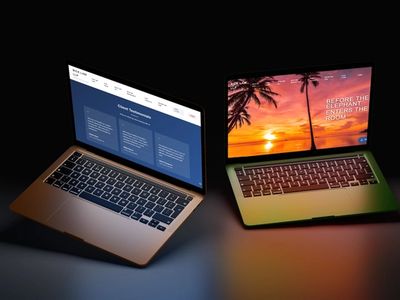
A Case Study For Bick Law LLP
We built a high speed law firm website demo with built-in lead qualification and Clio-integrated client portal, improving efficiency and reducing paralegal costs.

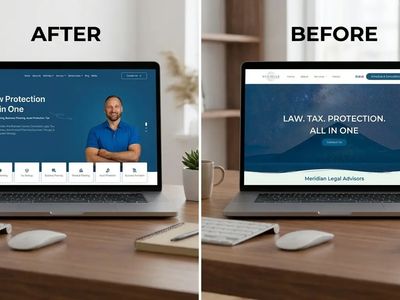
Meridian Legal Advisors
We gave their website a complete overhaul which improved credibility, clarified services, and streamlined the conversation of clients with a structured and user-friendly layout.


StoneBridge Law Firm
A conversion-focused personal injury law firm website designed to build trust, simplify urgent user journeys, and guide visitors toward legal consultation through modern UX, strong visual hierarchy, and credibility-driven design.
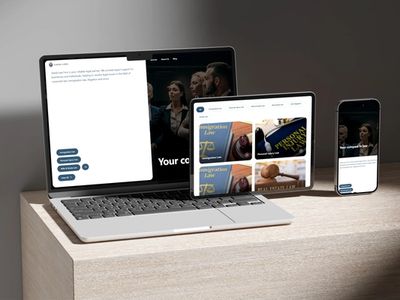
Zahid Law – Family Law Firm Toronto
We transitioned the website from "bloated" to a high-performance engine, increasing search visibility, optimizing engagement, streamlining consultation, and enhancing conversation rate.
Toronto Law Firm Website Questions
Still deciding? Ask us directly and we will answer without a pitch.
Do you work with firms outside Toronto?
Yes. A firm in Mississauga or Vaughan is usually better served by a plan built for its own market. The build process is the same.
Do you guarantee rankings or traffic?
No. Search results depend on your competition, your review profile and how quickly your intake answers the phone. We commit to the technical work, the content and the measurement.
Can you work alongside our existing developer or marketing team?
Yes. Design, code and content can be split however your team is shaped. We do not run competing campaigns for two firms in the same market.
We like our current site. Can you just improve it?
Possibly. Bring it to the call and we will tell you what we would keep. Some sites need a rebuild. Others need a faster platform, a better intake path, or new content.
Who owns the code and the accounts?
You do. The domain, the repository, the hosting, the analytics and the CRM stay in your name, and you can take them to another developer.
What happens after launch?
We watch how the site converts, where visitors leave, and which pages produce enquiries, then adjust. The build is the start of the measurement.